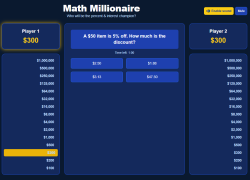
Help students master percent, interest, and financial math skills. They will apply real-world concepts like discounts, tips, and sales tax in an exciting, interactive game.
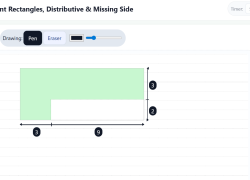
Students determine the total area of composite figures by splitting them into rectangles. They apply the distributive property and solve for missing side lengths.
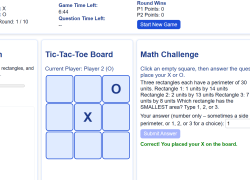
Your students will strengthen their understanding of area and perimeter by solving varied problems in an interactive tic-tac-toe game. They'll practice finding missing dimensions and comparing rectangles.
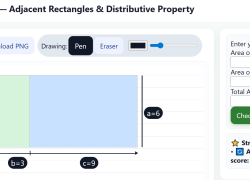
Students explore area concepts with an interactive tool. They calculate and combine adjacent rectangle areas to find total shapes, reinforcing multiplication and the distributive property.
Challenge students to design an Earth Science experiment. They will determine which sediment type exhibits the greatest porosity and permeability through hands-on investigation.
Discover how rivers curve and change shape. Students will learn core concepts of erosion, deposition, and stream formation, understanding various river landforms.
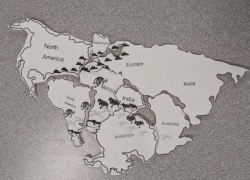
Students discover Alfred Wegener's evidence supporting Earth's changing continents and ancient supercontinent. They research fossils, climates, assemble a puzzle, and discuss findings.
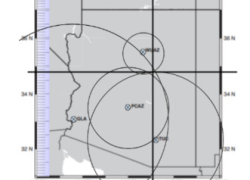
Students analyze seismogram data to triangulate earthquake epicenters. They calculate magnitudes, compare energy released, and understand seismic power, creating a professional press release.
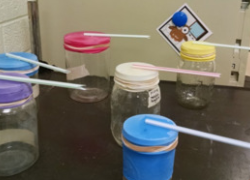
Students will build their own barometers and track daily changes. They will observe how barometric pressure correlates with high and low-pressure systems and local weather.
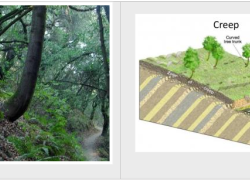
Students investigate mass movement types, their triggers, and prevention methods. They research significant landslides, exploring terms like erosion, deposition, and lahar.
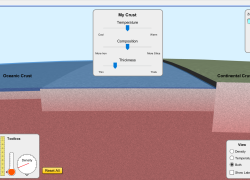
Students will explore plate tectonics, analyzing crust density and its impact on plate movement. They will compare oceanic and continental crust, predicting landform creation at various boundaries.
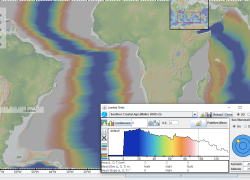
Students explore seafloor age with an online map, learning about Hess's work. They calculate spreading rates, discover age patterns, and investigate magnetic pole reversals.