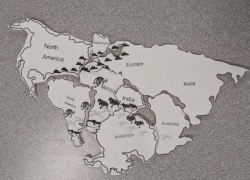
Students discover Alfred Wegener's evidence supporting Earth's changing continents and ancient supercontinent. They research fossils, climates, assemble a puzzle, and discuss findings.
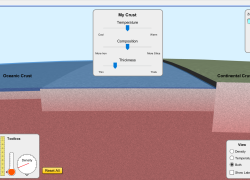
Students will explore plate tectonics, analyzing crust density and its impact on plate movement. They will compare oceanic and continental crust, predicting landform creation at various boundaries.
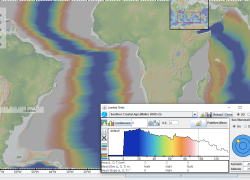
Students explore seafloor age with an online map, learning about Hess's work. They calculate spreading rates, discover age patterns, and investigate magnetic pole reversals.
Students model air convection by observing warming and cooling water. They discover how wind forms and explore high and low pressure systems. Connect temperature to atmospheric phenomena.
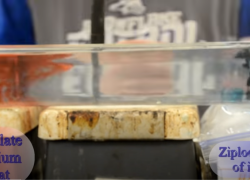
Students will actively observe Earth's plate tectonics with a simple chocolate demonstration. They'll witness crust break apart, magma rise, and understand earthquakes and igneous rock formation.
Your students will observe a powerful earthquake and explore liquefaction, learning how ground turns to quicksand. They'll comprehend environmental impacts and structural shifts.
Engage students with a dynamic convection currents model and demonstration. They will visualize air movement, applying understanding to water convection, volcanoes, and Earth's mantle.
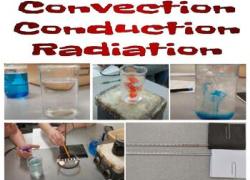
Students actively explore convection, conduction, and radiation through hands-on labs. They'll demonstrate principles using water, melting chocolate, heat lamps, and different colored papers.
Students explore the USGS earthquake website, investigating recent global seismic events. They analyze data on magnitude, intensity, depth, and geographic impact using maps and charts.
Students explore Earth's layers, scientific discovery methods, and concepts like convection currents and density. They will understand how layers work together to form our planet.
Students will understand why temperatures rise underground, exploring Earth's layers, convection, volcanoes, and plate tectonics. Discover Lord Kelvin's methods for dating Earth.
Help students understand seismology's essential tools: seismographs, seismometers, and seismograms. They will grasp how scientists use data to locate earthquakes and study Earth's interior.