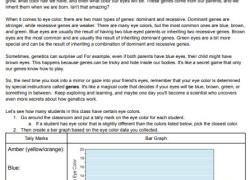
Guide students as they explore the sun's daily journey, light, and warmth. A hands-on experiment lets them simulate sunrise and sunset, deepening their understanding.
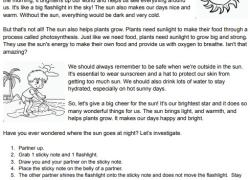
Engage students in exploring oil spill realities and their environmental harm. They'll conduct experiments to compare cleanup methods, deepening their understanding of ocean protection efforts.
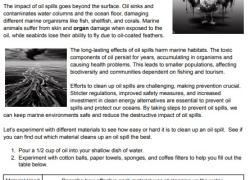
Students will read about and then explore water erosion through hands-on simulations. They'll observe how water shapes landscapes and analyze its diverse environmental impact.
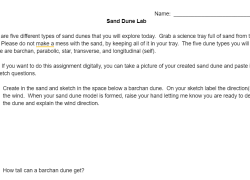
Students will explore five sand dune types by creating models and identifying characteristics. They will learn how wind patterns shape these geological formations, deepening their knowledge of earth science.
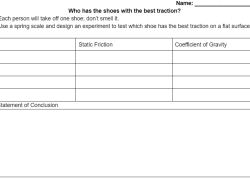
Your students will investigate and compare shoe traction by measuring static friction in this physics experiment. They conduct the lab, analyze data, and draw conclusions on optimal grip.
Students will solve engaging problems applying momentum, impulse, force, velocity, and kinetic energy to strengthen physics understanding. An answer key is provided.
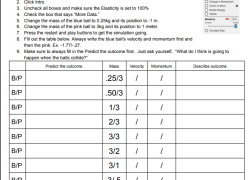
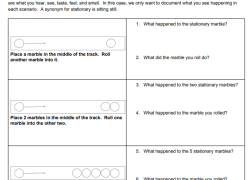
Students will conduct hands-on experiments, exploring motion and collision principles. They'll investigate how size and mass impact interactions, connecting lab discoveries to practical, real-life physics.
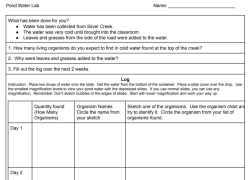
Students observe and document pond water organisms over two weeks. They analyze collected data to calculate population growth rates, create functions, and predict future populations.
Students dive into estimating water volume in diverse containers. They measure with graduated cylinders, then compare their predictions to actual amounts for engaging learning.
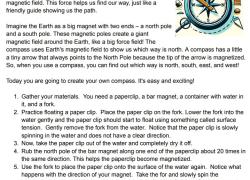
Students will read to understand Earth's magnetic field, then build their own compass. They will grasp magnetic principles and how a compass functions through a hands-on, engaging experiment.
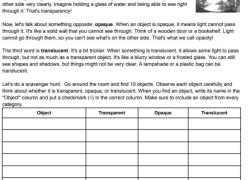
Engage students with a reading passage exploring transparent, opaque, and translucent properties. They will categorize objects during an interactive scavenger hunt, developing observation skills.
Students explore genetics, discovering how genes determine eye color. They'll collect classroom data, create a bar graph, and understand dominant and recessive inheritance patterns.