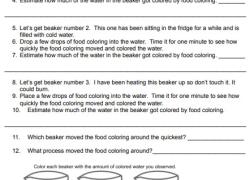
Students actively explore convection, conduction, and radiation through hands-on labs. They'll demonstrate principles using water, melting chocolate, heat lamps, and different colored papers.
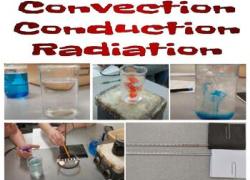
Challenge students to design and conduct their own penny oxidation experiment. They apply the scientific method, observe chemical weathering, and deepen content understanding through daily observations.
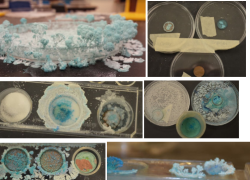
Engage students in a digital exploration of diverse landforms. Students research, document examples, origins, and images of plains, mountains, and plateaus, then share their unique findings.
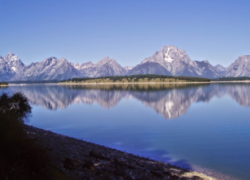
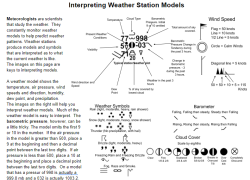
Help students master interpreting weather station models. They will analyze real data, create models, and understand key concepts like isotherms, pressure, and fronts.
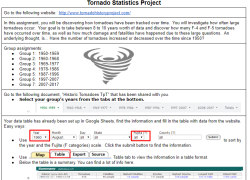
Your students will collect and graph tornado data, investigating historical trends, geographic patterns, and discussing their climate implications. They'll build spreadsheet skills.
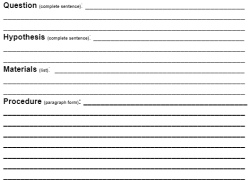
Students engage with the scientific method, honing grammar skills. They practice writing complete sentences to document experiment observations and insightful conclusions effectively.
Students follow instructions to grow beans, tracking daily changes and recording observations. They'll integrate hands-on science with technical reading comprehension and observation skills.
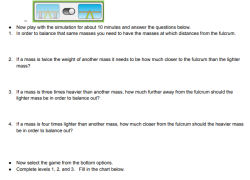
Your students will explore lever balancing in a Phet simulation. They investigate mass and distance relationships from the fulcrum and calculate mechanical advantage.
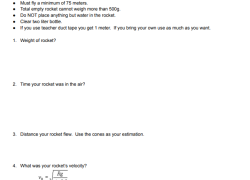
Guide students through building and launching water rockets. They'll apply physics, perform calculations, and analyze flight data over two launches, improving designs to maximize distance.
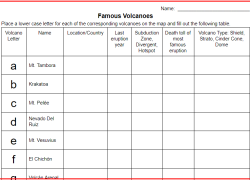
Students research 14 notable volcanoes, mapping locations, identifying plate boundaries, and classifying volcano types. They will explore eruption histories and geographical impacts.
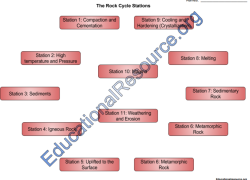
Students will roll dice and follow instructions to create unique rock cycle paths. This hands-on activity builds appreciation for Earth's diverse rock formations and their individual stories.
Students will explore convection, discovering how the sun's energy warms air and land, causing heat to transfer through rising warm air and sinking cool air.