The Water Cycle Video
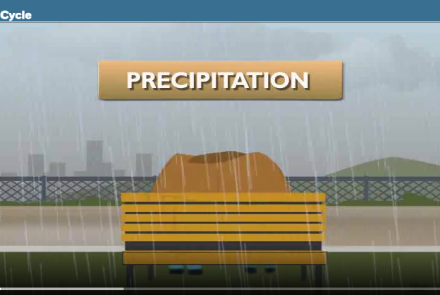
In this Study Jam video, students will learn about the water cycle. The vocabulary used in the video is precipitation, evaporation, condensation, humid, transpiration, clouds, dense, and water vapor.
In this Study Jam video, students will learn about the water cycle. The vocabulary used in the video is precipitation, evaporation, condensation, humid, transpiration, clouds, dense, and water vapor.
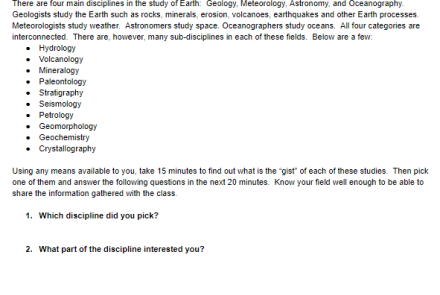
In this activity, students will briefly examine 10 fields/disciplines of Geology: hydrology, volcanology, mineralogy, paleontology, stratigraphy, seismology, petrology, geomorphology, geochemistry, and crystallography. They will pick one of those disciplines that they find interesting and find a job description in that field. Students will also find a salary range and what type of education they would need in order to obtain that salary. When students are finished, they should have an idea that there are money and great careers as a scientist in the field of Geology.
This TEDed video shows just how big the ocean is. It does a great job at putting the sheer size of the ocean into perspective.

EarthScience.xyz is a website that teaches earth science to students. It is a step-by-step book containing all the information needed to learn about the Earth. Teachers can have access to all the labs and assignments that are taught at Snowflake High School. There are tons of high-quality graphics, animation, and videos that will make presenting geology, meteorology, oceanography, paleontology, and astronomy to students engaging and fun.
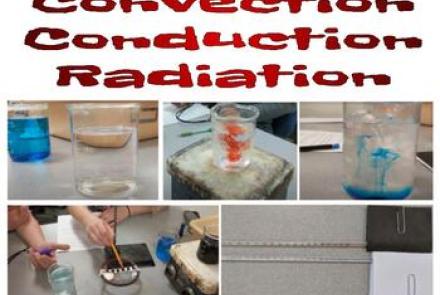
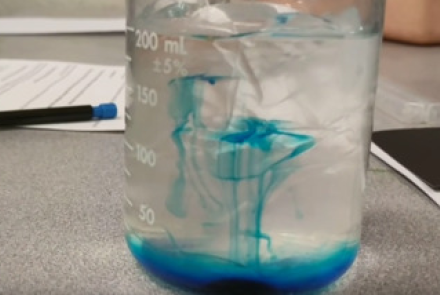
In this Earth Science or Physical Science lab, students will gain an understanding of the three types of thermal energy transfer: conduction, radiation, and convection. Students will use hot, cold, and room temperature water to demonstrate convection by using food coloring. Students will then see how long chocolate chips take to melt when you add heat to just one side of some tin foil. Finally, they will use heat lamps, thermometers, and dark and light-colored papers to demonstrate radiation and the absorption of radiated heat.
This is a pretty cool 3d animation comparing the different depths of water bodies all the way down to the Marianas Trench. This would be a cool video to show during lessons in oceanography or when discussing plate tectonics.
Prepare to be amazed and informed by this excellent animated video on the topic of tsunamis. Through the use of stunning visuals and easy-to-follow explanations, viewers will gain a comprehensive understanding of what tsunamis are, how they are formed, and the devastation they can cause. This video is an excellent resource for teachers and students alike, as it can be used to enhance lessons on tsunamis for a wide range of grade levels.
This video does a great job of discussing and showing the processes of coastal beaches and rock formations. The video also discusses a little bit about ocean wave formation.
This is a visually appealing and dramatic video that introduces your students to the study of biomes. This is a great video to show as you get started on a new unit of ecology.
At the beginning of science courses, usually, the scientific method is taught. My high school students have to demonstrate their knowledge of the scientific processes and especially show an understanding of data collection, variables, and conclusions. This document contains the rubric I use to grade their assignment as well as the student instructions that I give. This is in a Google doc so that you can edit the instructions or manipulate the rubric.