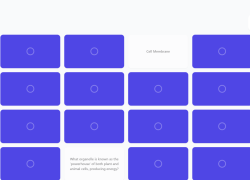
Generate engaging flashcards instantly. Students will strengthen understanding across subjects, practicing vocabulary, math, and science concepts with visual aids, interactive games, and independent study options.
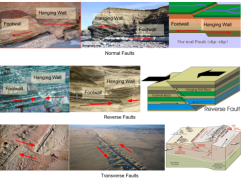
Students will use Google Drawing to create diagrams of earthquake fault types. They will identify real-world examples, apply forces like shear and tension, and label key geological structures.
Engage students with Bill Nye as they explore the joy of discovery. They will hypothesize, test ideas, and form conclusions, thinking like scientists with captivating visuals.
Engage students in a digital exploration of diverse landforms. Students research, document examples, origins, and images of plains, mountains, and plateaus, then share their unique findings.

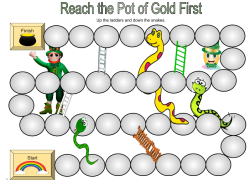
Engage 3rd graders with this St. Patrick's Day Snakes and Ladders game. Students use game cards to practice various skills, making learning fun and interactive.
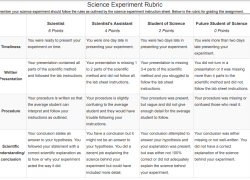
Help students understand expectations for their science experiment presentations. Grade their scientific inquiry, data interpretation, and communication effectively with clear criteria.
Master creating realistic, customizable Jeopardy-style games with Jeopardylabs.com. Students will actively review and learn new material through exciting, competitive gameplay.
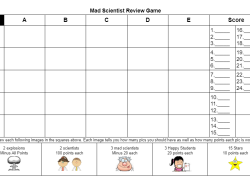
Students enthusiastically review vocabulary and key concepts with an interactive game. They answer questions, earn points, and face thrilling risks, fostering active learning and memorable test prep.
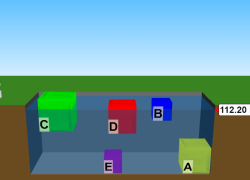
Students will understand mass, volume, and density concepts. They will digitally manipulate object volumes, measure masses, and calculate densities using an interactive simulation.
Students discover the Magnus Effect by flying pens across the classroom. They will practice measuring distances using the metric system and analyze data with spreadsheets.
Students discover symbiotic relationships: mutualism, commensalism, and parasitism. They analyze organism interactions and specifically examine the unique bond between the clownfish and sea anemone.
Students will analyze the mathematical principles behind levers, discovering how they reduce effort. They'll also explore Archimedes's foundational work and experiments in physics.