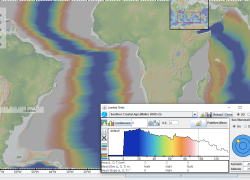
Understanding Seafloor Spreading Lab
NOTE: Make sure your computers can run Java-based software. Inside the preview, you can test the program out by clicking on the first link. This program will not work with Chromebooks as they can't run Java.
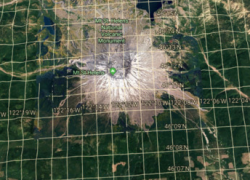
In this activity, students will use Google Earth to find the coordinates of some awesome Geologic Formations. Students will have a greater understanding of latitude and longitude. They will gain an understanding of how to use Google Earth to make discoveries. A link to a presentation that contains images and the geology behind many of the formations is also available. There are two parts to the assignment. First students will type in the coordinates into Google Earth to make a discovery.
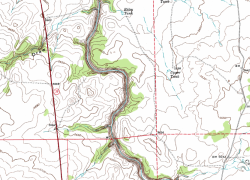
In this activity, students will engage in a topographic map exercise. When a student is finished they will understand what contour lines, elevation, contour interval, contour index, and quadrants are. Students will analyze a map of Snowflake AZ, you can pick your own map if you wish, and discover why it is important to understand topographic maps.
For more Earth Science Labs and Resources visit EarthScience.xyz
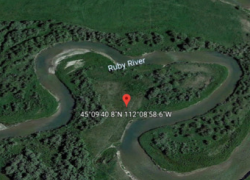
In this Earth Science digital activity, students will locate specific water eroded or deposited landforms. The activity will enhance their understanding of Geo Coordinates. Students will use Google Earth and become more proficient with its use. Students will see actual satellite views of their vocabulary words instead of just memorizing the definitions. Vocabulary words that will be reinforced are Meanders, oxbow lakes, sediment, river types (old, mature, young), delta, deposition, erosion, alluvial fan, and flood plain.
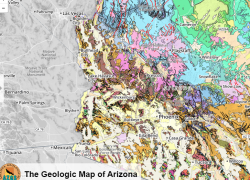
In this exercise, students will use a Geologic map to discover what types of rocks, faults, and ages of those rocks are. They will read about the different environments that Arizona has had over the ages. They will also get a review on words like conglomerate, intrusions, sills, igneous and sedimentary rocks.
For more Earth Science labs and resources visitEarthScience.xyz
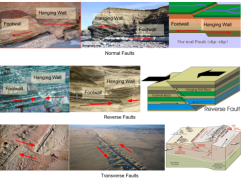
In this EdTech Earth Science activity, students will use Google Drawing to create an image that demonstrates the three main types of earthquake faults, Transverse, Normal, and Reverse. They will find 2 real images of each type of fault. They will draw arrows pointing in the direction that the forces, shear, compression, and tension are moving on each image. They will also find and add an actual diagram of each type of fault. Finally, students will label the hanging wall and footwall on each image except for the transverse/strike-slip.
This video provides a concise overview of Alfred Wegener's involvement in the discovery of Continental Drift. It sheds light on the challenges he faced in convincing the scientific community that continents were in motion.
At the beginning of science courses, usually, the scientific method is taught. My high school students have to demonstrate their knowledge of the scientific processes and especially show an understanding of data collection, variables, and conclusions. This document contains the rubric I use to grade their assignment as well as the student instructions that I give. This is in a Google doc so that you can edit the instructions or manipulate the rubric.