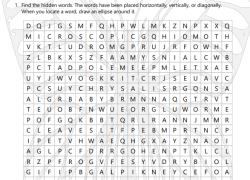
Students will actively search for key vocabulary related to metamorphosis. Reinforce terms describing a caterpillar's transformation into a butterfly, ideal for 3rd graders.
Students will explore how Alzheimer's disease affects the brain, understanding its impact and the progressive stages of this complex neurological condition.
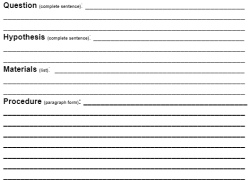
Students engage with the scientific method, honing grammar skills. They practice writing complete sentences to document experiment observations and insightful conclusions effectively.
Students will explore fascinating butterfly adaptations through an engaging video. They'll discover how these creatures protect themselves and attract mates using camouflage and mimicry.
Engage students as they explore evolution's five core components: population effects, non-random mating, mutations, gene flow, and adaptations. They will grasp how these factors shape species change.
Engage students in the meticulous process of fossil excavation and preparation. They will learn how ancient relics journey from discovery in rock to museum exhibition.
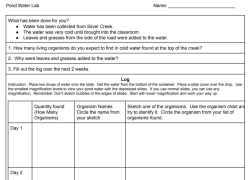
Students observe and document pond water organisms over two weeks. They analyze collected data to calculate population growth rates, create functions, and predict future populations.
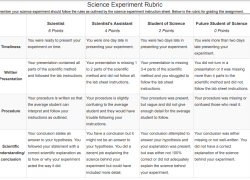
Help students understand expectations for their science experiment presentations. Grade their scientific inquiry, data interpretation, and communication effectively with clear criteria.
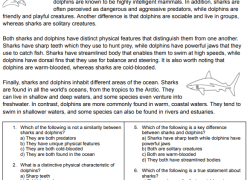
Students will compare and contrast fascinating animals like frogs, sharks, and lions through engaging texts. Boost their reading comprehension and critical thinking with insightful questions.
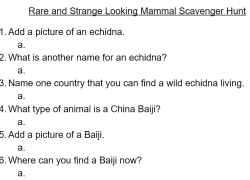
Your students will research five rare and unusual mammals online. They will discover fascinating facts, learn about habitats, and practice digital skills by adding pictures to a document.
Students will trace energy and matter movement through food chains, learning about producers, consumers, and apex predators. Key concepts like the ten percent rule are clearly explained.
Students discover symbiotic relationships: mutualism, commensalism, and parasitism. They analyze organism interactions and specifically examine the unique bond between the clownfish and sea anemone.