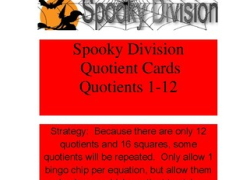
Students master division facts by matching quotients to equations or vice-versa. This festive Halloween bingo game engages learners with spooky math practice, perfect for skill-building.
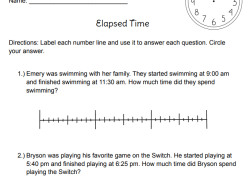
Students will practice calculating elapsed time on a number line, labeling it and circling answers. Relatable story problems will engage them, with a clock provided for coloring fun.
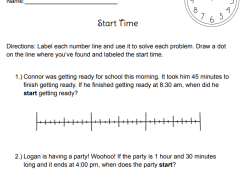
Students will practice finding elapsed time start points using number lines. Real-life problems make learning relevant, with a fun coloring task for early finishers.
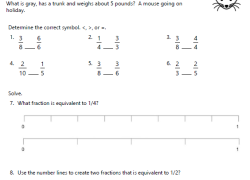
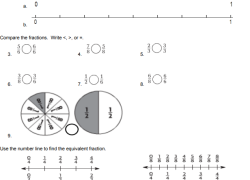
Students will practice comparing 3rd-grade fractions using symbols and number lines. They will also identify and shade equivalent fractions on various visual models, including charts. Excellent for review.
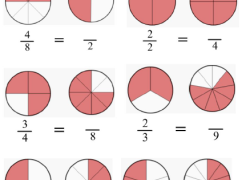
Help 3rd graders master equivalent fractions using visual pie and bar models. Students will identify equivalents and create their own examples, building conceptual understanding.
Students will explore equivalent and comparing fractions using number lines, diagrams, and word problems. They will strengthen their understanding of fraction properties and relationships.
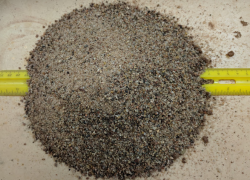
Students determine the angle of repose for sand, observing how slope impacts stability. They will compare trials, apply math skills, and analyze observations about erosion and landslides.
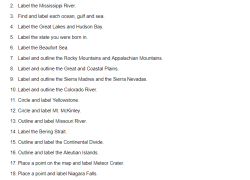
Guide students as they learn to identify, label, and map 25 major landforms spanning North and South America. An optional presentation enhances their geological understanding.
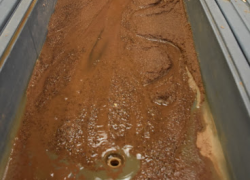
Students use stream tables to observe how rivers develop. They will explore how landslides change river courses, meanders, sediment deposition, river paths, and delta formation.
Students will locate and learn the purpose of various expository text features, including captions, diagrams, keywords, and glossaries, using any magazine.