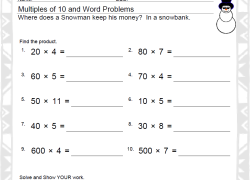
Third graders will find products of 10 and solve two word problems involving multiples of 10. They will strengthen their multiplication and division skills.
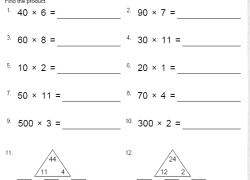
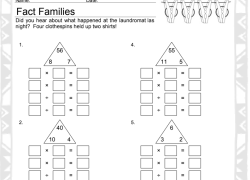
Engage 3rd graders with 10 problems focused on multiples of 10. They will also reinforce multiplication fact families using two helpful triangle activities.
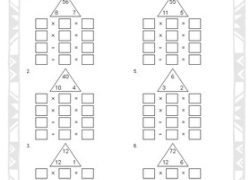
Help students master multiplication and division fact families through three engaging worksheets. They will practice essential math facts and apply skills to solve single-step word problems.
Students will build multiplication fact fluency 2-12 using timed tests, aiming for speed and accuracy. Engaging daily practice includes fun facts, jokes, and pictures to trace or color.
Students practice 6 multiplication and division fact family triangles. They also solve 4 single-step word problems, building fluency and essential problem-solving skills for 3rd graders.
Students partner up to roll dice, create multiplication and division equations, and complete fact family triangles. They practice essential 3rd grade math skills in a fun, competitive game.
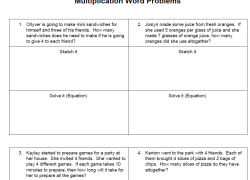
Help 3rd graders master multiplication word problems. Students will read, sketch their thinking, and write equations to solve four engaging real-world scenarios independently.
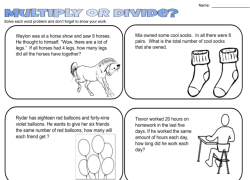
Students will practice solving 8 multiplication and division word problems. They'll apply math skills, show work, and strengthen problem-solving abilities in real-world contexts.
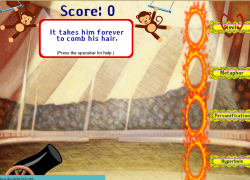
3rd graders identify similes, metaphors, personification, and hyperbole through an engaging, fiery game. Students will categorize sentences to master figurative language skills.
Engage students with a video exploring the incredible scale of Earth's oceans. They will visualize its immense vastness, gaining a powerful new perspective on its true size.