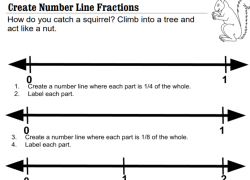
Guide students to partition number lines, representing fractions including those greater than one whole. They will practice placing proper and improper fractions accurately on five number lines.
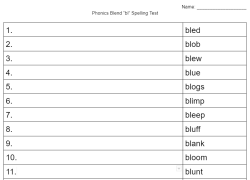
Help students practice and master "bl" phonics blends with a 20-word spelling test. Students listen and write, reinforcing their ability to spell "bl" words.
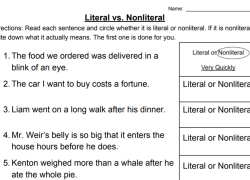
Help 3rd graders practice distinguishing between literal and nonliteral language. Students will interpret figurative sentences, explaining their true meaning and identifying different language uses.
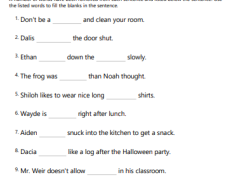
Engage students in practicing "sl" blends by completing cloze sentences. They will choose appropriate words from a word bank, enhancing their vocabulary and contextual understanding.
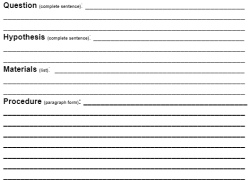
Students engage with the scientific method, honing grammar skills. They practice writing complete sentences to document experiment observations and insightful conclusions effectively.
Students follow instructions to grow beans, tracking daily changes and recording observations. They'll integrate hands-on science with technical reading comprehension and observation skills.
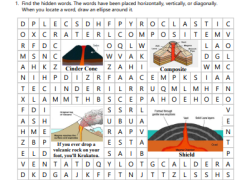
Students will explore volcano vocabulary using a word search and crossword puzzle. They will identify and learn terms like ash, lava, and eruption in engaging activities.
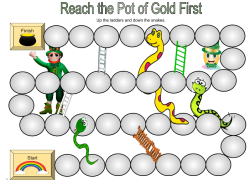
Engage 3rd graders with this St. Patrick's Day Snakes and Ladders game. Students use game cards to practice various skills, making learning fun and interactive.
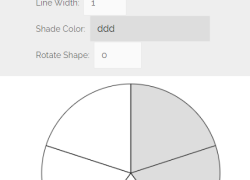
Create custom visuals of fractional parts using circles and polygons. Students will visualize and better understand parts of a whole in your lessons and assignments.
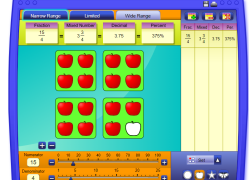
Students visually understand fractions and their equivalence as mixed numbers, decimals, and percents. Interactive tools demonstrate these relationships using various models.