x

📊 ChartMaster Pro — Custom Classroom Chart Creator for Teachers

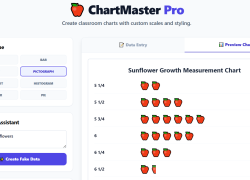
📊 ChartMaster Pro is a powerful teacher tool designed to help educators create clear, engaging, and standards-aligned classroom charts with full control over chart type, scale, icons, labels, and styling.

Built specifically for classroom instruction, ChartMaster Pro makes it easy to create charts that students can read, analyze, and discuss—whether for math, science, social studies, or data talks.

Earth Science: What's in that Mineral? Activity

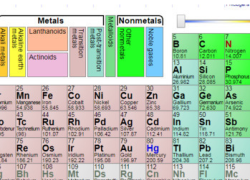
This Google search activity allows students to go to the internet to search for specific minerals and then to use the Periodic Table to discover what elements the mineral is made out of. This activity usually takes a full 50 minutes for the students to find all of the answers. Students will investigate 12 different minerals and which elements that make up each mineral. They will look at a periodic table and decide whether the elements are metals or nonmetals. Students will also search the internet and find out some industrial uses for each mineral.

Current USGS Significant Worldwide Earthquake Investigation

In this Earth Science Earthquake activity, students will explore the USGS current earthquake website. Students will understand what is to be found on the USGS Earthquake website. They will discover how many earthquakes have occurred recently. Students will gain an understanding of what the Mercalli Intensity Scale is used for. Students will discover the 5 largest recent earthquakes that have occurred around the world. They will gain a better understanding of geography as well by using maps and map scales to determine distances from an earthquake epicenter.

A digital study of Awesome Landforms

In this one-day activity students will read and learn about the different types of landforms that are out there. They will then, as groups, create a Google Doc and create a table within it. They will find examples, describe the origins, and find an image that represents, coastal plains, interior plains, folded mountains, upwarped mountains, fault-block mountains, volcanic mountains, and plateaus. After they are done students will share some unique discoveries that they have made with the class and compare them with their discoveries with those of others.

Subscribe to Research