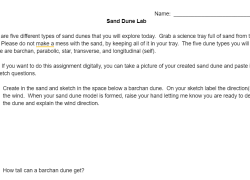
Students will explore five sand dune types by creating models and identifying characteristics. They will learn how wind patterns shape these geological formations, deepening their knowledge of earth science.
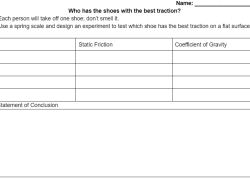
Your students will investigate and compare shoe traction by measuring static friction in this physics experiment. They conduct the lab, analyze data, and draw conclusions on optimal grip.
Students will solve engaging problems applying momentum, impulse, force, velocity, and kinetic energy to strengthen physics understanding. An answer key is provided.
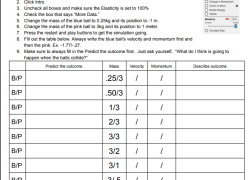
Students investigate collision and momentum through a digital simulation. They make predictions, analyze results, and deepen understanding of elastic/inelastic collisions, velocities, and data analysis.
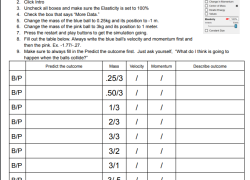
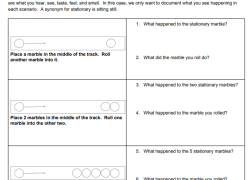
Students will conduct hands-on experiments, exploring motion and collision principles. They'll investigate how size and mass impact interactions, connecting lab discoveries to practical, real-life physics.
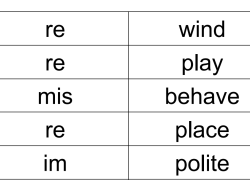
Students actively match prefixes to root words in a fun, timed game. They build vocabulary and strengthen understanding of how prefixes change word meaning.
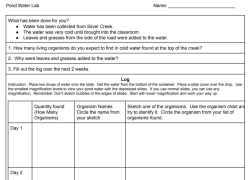
Students observe and document pond water organisms over two weeks. They analyze collected data to calculate population growth rates, create functions, and predict future populations.
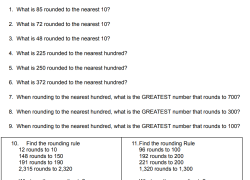
Support students struggling with rounding to master key concepts. Through focused discussion of targeted questions, students will clarify misconceptions and strengthen their number sense.
Collect essential student details from parents to better meet individual learning needs. Students will receive tailored support and benefit from a more informed classroom approach.
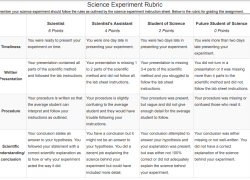
Help students understand expectations for their science experiment presentations. Grade their scientific inquiry, data interpretation, and communication effectively with clear criteria.
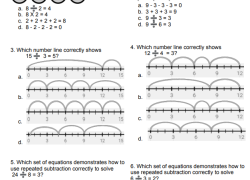
Students will master 3rd-grade division strategies: arrays, number lines, and repeated subtraction. They will sharpen problem-solving skills with engaging task cards or game play.
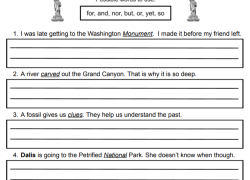
Students will combine two simple sentences into one compound sentence. They will practice using conjunctions effectively, strengthening their understanding of sentence structure and improving writing fluency.