Unlock Premium Teacher Access
🔓 Unlock Premium Teacher Access
Everything you need. One simple yearly plan.
Upgrade to Premium and get full access to all current and future content—designed to save you time, boost engagement, and support real classrooms.
✅ What’s included with Premium
-
Unlimited access to all content on the site
-
Exclusive teacher tools to plan, practice, and assess faster
-
Future Teachers Pay Teachers resources included
(All my current and upcoming TPT products will be added at no extra cost) -
New content added regularly—your subscription grows in value over time
💲 Simple, affordable pricing
$20 per year
Less than $2 a month for tools you can use all year long.
🎯 Who Premium is for
-
Classroom teachers who want ready-to-use resources
-
Teachers who like games, tools, and engagement
-
Anyone tired of buying the same types of resources over and over
Upgrade to Premium
NOTE: Make sure your computers can run Java-based software. Inside the preview, you can test the program out by clicking on the first link. This program will not work with Chromebooks as they can't run Java.
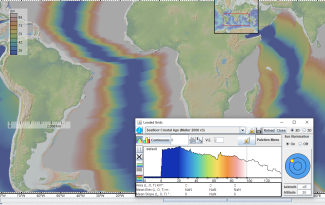
In this digital seafloor spreading lab, students will use an online mapping program that has mapped the ocean floor. Students will discover that the ocean floor is younger near the middle of the oceans and gets older as you move to the shorelines. Students will read about Hess and his mapping of the ocean floor. An age profile chart will be used so that students can visually see the ages of rock getting progressively older. They will learn to read this profile chart and calculate the rate of seafloor spreading in mm/y based on data that they collect. They will search the globe for the oldest ocean rocks and hopefully have an idea as to why they are that old or young compared to others.
Toward the end of the activity, students will watch a short video about the Earth's Magnetic pole reversals and answer a few questions based on that video.
This assignment also follows reading and discussion that can be found at http://earthscience.xyz/SeaFloorSpreading