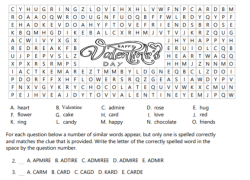
Students will discover 15 Valentine's vocabulary words through a fun word search. They will also reinforce spelling skills with an engaging identification activity.
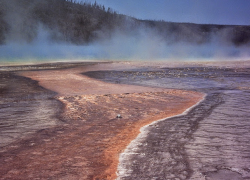
Students research six Yellowstone water features, like geysers and hot springs. They learn by gathering facts and images, creating a presentation to share their findings.
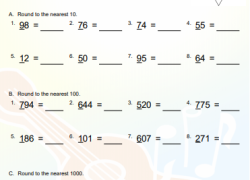
Students will confidently practice rounding whole numbers to the nearest 10, 100, and 1000. This essential math activity strengthens their number sense.
Students discover various fossil types, including trace, mold, and body fossils. They learn how these fascinating ancient remains form and explore their unique characteristics.
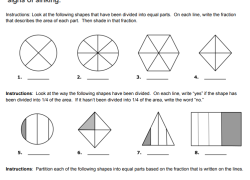
Students determine if shapes are divided equally, then practice partitioning shapes into equal parts. This builds crucial understanding for describing areas using fractions.
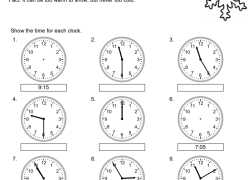
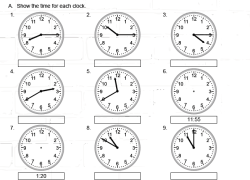
Engage 3rd graders in telling time practice! Students draw clock hands and write times for nine clocks. A bonus review includes four 3-digit subtraction problems.
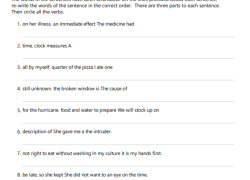
Students practice grammar and vocabulary by reordering three-part scrambled sentences. They then strengthen verb recognition, identifying and circling verbs within each completed sentence.
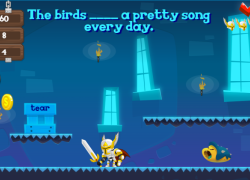
Engage students in a vocabulary-building activity. They will fill in missing words, practice fact/opinion, context clues, and drawing conclusions to boost comprehension.
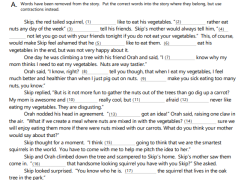
Engage students with a cloze reading story about Skip the squirrel and his dislike for vegetables. They will practice forming contractions by converting words to fill in the blanks.