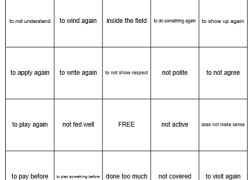
Help third graders reinforce and reteach prefixes and suffixes in a fun way. Students collect jewels and answer reading questions, building key vocabulary through an engaging game.
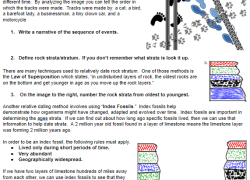
Students will learn relative dating methods by solving puzzles and numbering rock strata. They'll define superposition, index fossils, cross-cutting, and unconformities for geological sequencing practice.
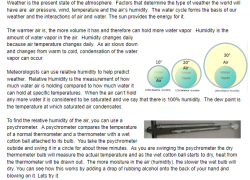
Students explore relative humidity and dew point, using psychrometers and calculators. They conduct experiments, formulate hypotheses, and discuss humidity's impact, comparing different measurement methods.
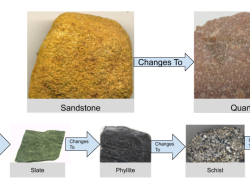
Students research eight metamorphic rocks, understanding foliated vs. non-foliated types, parent rocks, and key minerals. They'll engage in group discussions with higher-order thinking questions.
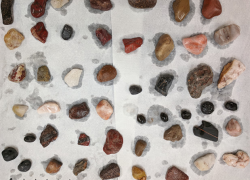
Engage students in a hands-on exploration of rock abrasion. They will classify, measure mass loss in a tumbler, and calculate change rates, revealing weathering's powerful impact.
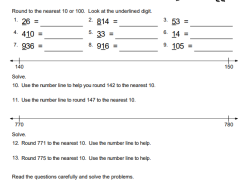
Guide third graders in rounding numbers to the nearest 10 and 100. Students will practice using number lines and solving engaging word problems to build proficiency.
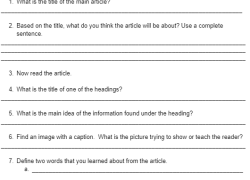
This worksheet reinforces essential reading standards as students engage with Scholastic News articles. They will practice comprehension, critical thinking, and analysis, building stronger literacy skills.
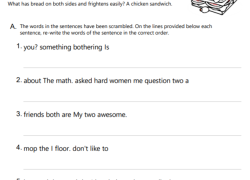
Students will practice essential grammar skills by arranging mixed-up words into coherent sentences. This activity strengthens their understanding of sentence structure and syntax.
Students explore Earth's age through an engaging animated video. They will learn radioactive dating methods like uranium and zirconium, and understand geologists' techniques for relative age dating.