x

Understanding Earthquakes through Analyzing and Plotting Data

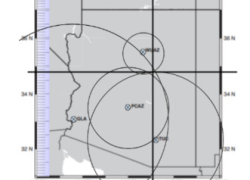
In this Earth Science activity, students will gain a deeper understanding of the following Vocabulary: seismologist, seismograph, seismogram, epicenter, P-Wave, S-Wave, Wave Amplitude, Magnitude, and Richter/Moment Scale.

Students will create a digital spreadsheet that will help them calculate data they gathered by looking at actual seismograms. Technology is incorporated throughout the lesson.

Google Drawing and Diagram: Fault Types and Forces

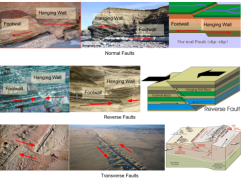
In this EdTech Earth Science activity, students will use Google Drawing to create an image that demonstrates the three main types of earthquake faults, Transverse, Normal, and Reverse. They will find 2 real images of each type of fault. They will draw arrows pointing in the direction that the forces, shear, compression, and tension are moving on each image. They will also find and add an actual diagram of each type of fault. Finally, students will label the hanging wall and footwall on each image except for the transverse/strike-slip.

Earthquake Liquefaction

In this video, students will witness the destructive power of an earthquake and learn about a fascinating phenomenon called liquefaction. This video was captured during the 2011 earthquake in Japan and shows how the earth shifts and grinds the dirt, squeezing the water out and causing the ground to become like quicksand. By watching this video, students will gain a better understanding of the impact earthquakes can have on the environment and how they can cause changes in the ground structure.

Subscribe to Earthquakes