Introduce cells with an engaging animation! Students will explore diverse cell types, learn their functions, and discuss trivia questions to spark scientific curiosity.
Students explore and compare the immense depths of water bodies, from oceans to the Marianas Trench, using an engaging 3D animation. Great for oceanography or plate tectonics.
Engage students in a digital exploration of diverse landforms. Students research, document examples, origins, and images of plains, mountains, and plateaus, then share their unique findings.

Engage students with a video exploring why the moon appears larger near the horizon. They will learn about the fascinating optical illusion altering our perception of lunar size.
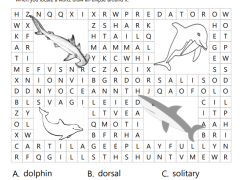
Engage students with a word search exploring sharks and dolphins. They will discover new vocabulary and reinforce fascinating facts about these incredible ocean animals.
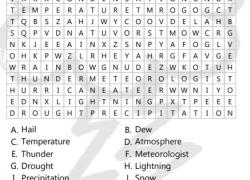
Engage students with a fun word search exploring essential weather vocabulary. They will locate terms like lightning, tornado, and hurricane, reinforcing knowledge of storm power.
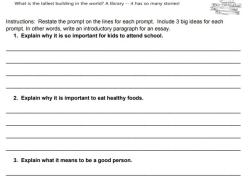
Students will skillfully rephrase writing prompts and brainstorm three main ideas. They will learn to construct effective introduction paragraphs for opinion essays.
Help students master interpreting weather station models. They will analyze real data, create models, and understand key concepts like isotherms, pressure, and fronts.
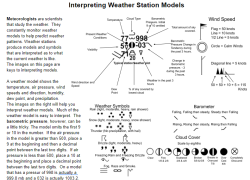
Your students will collect and graph tornado data, investigating historical trends, geographic patterns, and discussing their climate implications. They'll build spreadsheet skills.
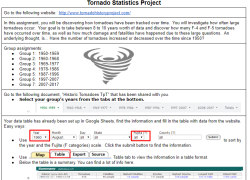
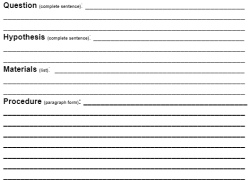
Students engage with the scientific method, honing grammar skills. They practice writing complete sentences to document experiment observations and insightful conclusions effectively.
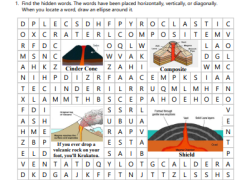
Students will explore volcano vocabulary using a word search and crossword puzzle. They will identify and learn terms like ash, lava, and eruption in engaging activities.
Create custom visuals of fractional parts using circles and polygons. Students will visualize and better understand parts of a whole in your lessons and assignments.