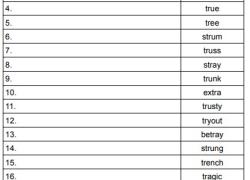
Help students master 'tr' phonics blends with this 20-word spelling assessment. They will study, take the test, self-check, and correct errors. A customizable Google Doc is included.
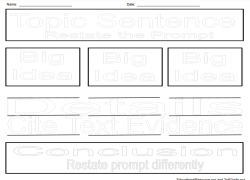
Students organize ideas for five-paragraph expository writing. They'll brainstorm main ideas, add details, cite text evidence, and structure their conclusion paragraphs effectively.
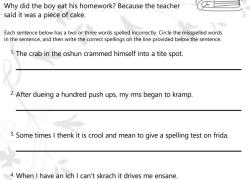
Challenge students to locate 2-3 misspelled words in 10 sentences, emphasizing 'cr' blends. An alphabetical word bank supports correct spelling and reinforces phonics skills.
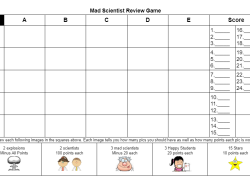
Students enthusiastically review vocabulary and key concepts with an interactive game. They answer questions, earn points, and face thrilling risks, fostering active learning and memorable test prep.
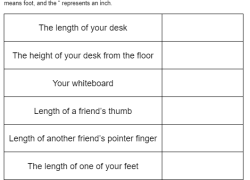
Engage students in hands-on practice measuring to the nearest quarter inch. They use a ruler to measure classroom objects and more, building practical skills in this customizable lab.
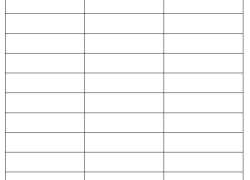
Students dive into estimating water volume in diverse containers. They measure with graduated cylinders, then compare their predictions to actual amounts for engaging learning.
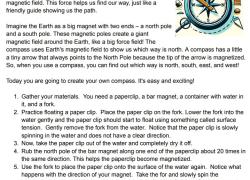
Students will read to understand Earth's magnetic field, then build their own compass. They will grasp magnetic principles and how a compass functions through a hands-on, engaging experiment.
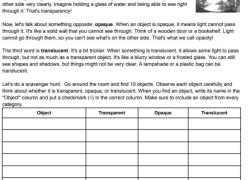
Engage students with a reading passage exploring transparent, opaque, and translucent properties. They will categorize objects during an interactive scavenger hunt, developing observation skills.
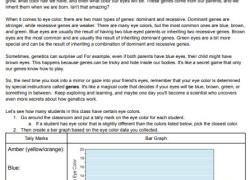
Students explore genetics, discovering how genes determine eye color. They'll collect classroom data, create a bar graph, and understand dominant and recessive inheritance patterns.
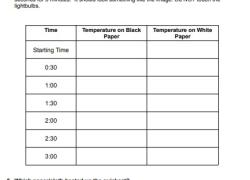
Students learn about the sun's heat energy transfer through radiation. They will investigate how colors affect heat absorption with a reading passage and an interactive lab experiment.
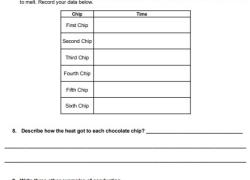
Students will learn about heat transfer through conduction. They will conduct an experiment, observe heat traveling, and identify real-life examples, deepening their understanding of scientific principles.
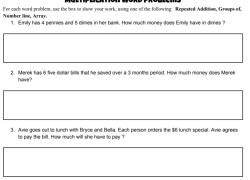
Engage students with 10 word problems, strengthening multiplication and division skills. They demonstrate problem-solving using strategies like arrays, repeated addition, and equal groups.