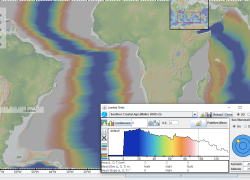
Students explore seafloor age with an online map, learning about Hess's work. They calculate spreading rates, discover age patterns, and investigate magnetic pole reversals.
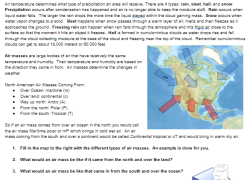
Students analyze real-time surface weather maps to identify air masses, pressure systems, and fronts. They learn to predict weather patterns, developing essential meteorology skills.
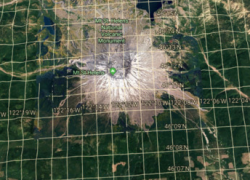
Engage students with Google Earth! They will explore Earth's stunning geologic formations by typing coordinates and searching, building essential latitude and longitude skills for global discovery.
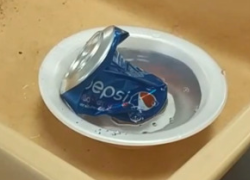
Students explore atmospheric pressure by crushing a can and calculating the powerful force of surrounding air. They learn about psia, elevation, and apply math to explain scientific observations.
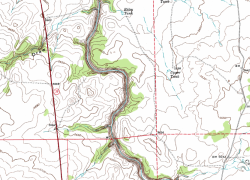
Students explore topographic maps in a lab, learning contour lines, elevation, and quadrants. They analyze maps, discovering their real-world importance in Earth Science.
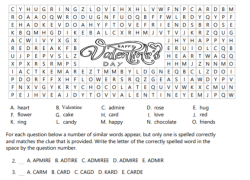
Students will discover 15 Valentine's vocabulary words through a fun word search. They will also reinforce spelling skills with an engaging identification activity.
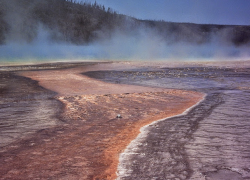
Students research six Yellowstone water features, like geysers and hot springs. They learn by gathering facts and images, creating a presentation to share their findings.
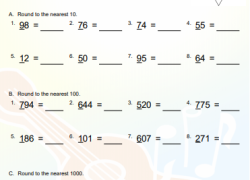
Students will confidently practice rounding whole numbers to the nearest 10, 100, and 1000. This essential math activity strengthens their number sense.
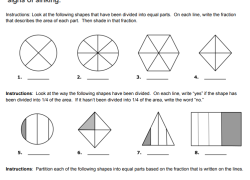
Students determine if shapes are divided equally, then practice partitioning shapes into equal parts. This builds crucial understanding for describing areas using fractions.
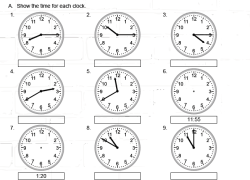
Engage 3rd graders in telling time practice! Students draw clock hands and write times for nine clocks. A bonus review includes four 3-digit subtraction problems.
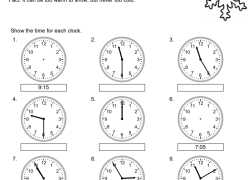
Help students practice drawing clock hands and accurately telling time. They'll engage with 12 unique clocks, mastering essential time-telling skills.
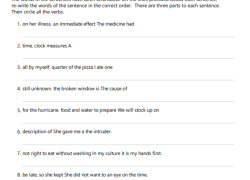
Students practice grammar and vocabulary by reordering three-part scrambled sentences. They then strengthen verb recognition, identifying and circling verbs within each completed sentence.