Borrowing Across 0s Check For Understanding Worksheet
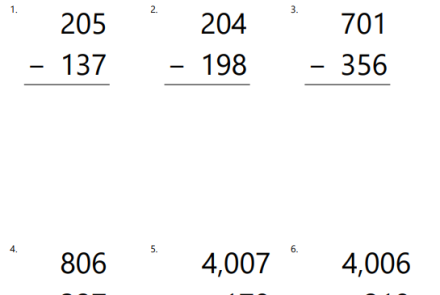
Use this subtraction worksheet to check for understanding or reteach. There are 6 math subtraction questions that students will solve that require students to borrow across 0s.
Use this subtraction worksheet to check for understanding or reteach. There are 6 math subtraction questions that students will solve that require students to borrow across 0s.
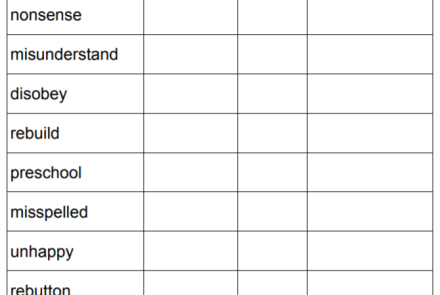
In this 3rd-grade worksheet, students will break apart words that contain prefixes. They will write the root word, and the prefix itself, and then define the word.
You can also access the Google Doc version of this prefix activity.
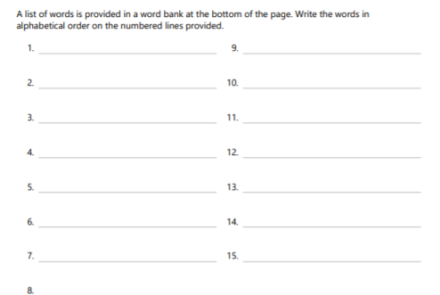
This alphabetical order worksheet using words from Saxon Phonics lesson 12, can also be used as a competition where students are challenged to place all words in the correct alphabetical order.
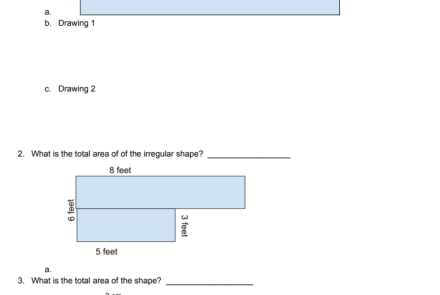
This worksheet has 9 questions relating to the area. Students will draw the area. They will find the total area of two rectangular shapes. They will find the area of a complex shape. They will use an array to help find the area.
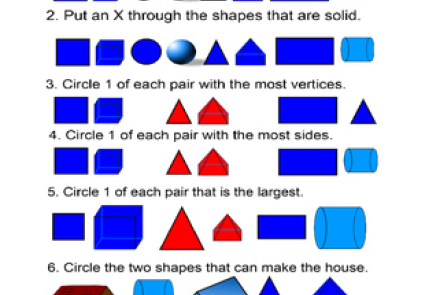
Through this reinforcement math activity students will identify a 2d shape vs. a 3d shape. Shapes included circles, spheres, squares, cubes, rectangles, pyramids, cylinders and cones. Students will also practice determining larger shapes vs. smaller shapes. They will get some practice telling which shape has more vertices than another. Essential questions are What is a shape? How can shapes be identified? What is an attribute? How do we use attributes to draw and compare shapes?
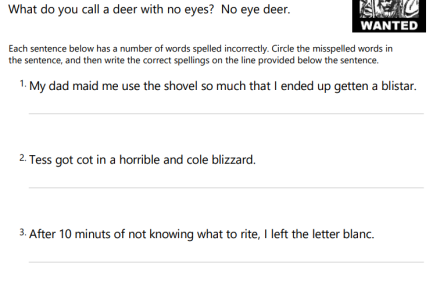
Students will find and circle up to 3 spelling words in each of the 10 sentences. They will then write the sentence correctly on the provided lines. This is designed to reinforce phonics "bl" blends and spelling.
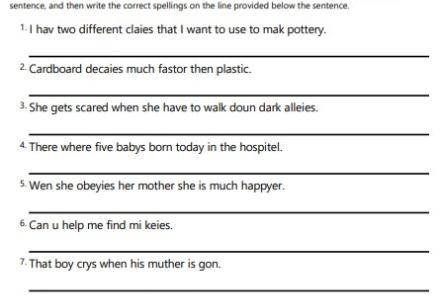
This 3rd-grade spelling worksheet is designed to help young learners master their spelling skills! This worksheet contains 10 sentences, each with 2 to 3 words that are misspelled. With a specific focus on words that end in the letter "y", this worksheet is the perfect tool to help students improve their spelling in a fun and interactive way. Students will need to decide whether to change the word that ends in 'y' to 'ys' or 'ies.'
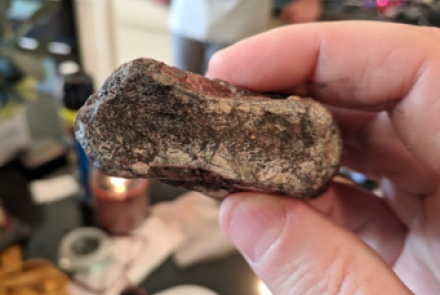
In this 7-12 Earth Science lab, students will get a chance to hone in on their observation and inference skills. Students will work in groups to observe 4 different rocks. They will make inferences about the environment that the rocks came from as well as take an educated guess as to which rock type the rock belongs, igneous, metamorphic, or sedimentary. Students will write those observations down and then share one of their rocks with the class.
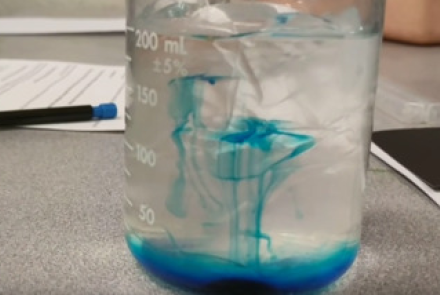
At the beginning of science courses, usually, the scientific method is taught. My high school students have to demonstrate their knowledge of the scientific processes and especially show an understanding of data collection, variables, and conclusions. This document contains the rubric I use to grade their assignment as well as the student instructions that I give. This is in a Google doc so that you can edit the instructions or manipulate the rubric.
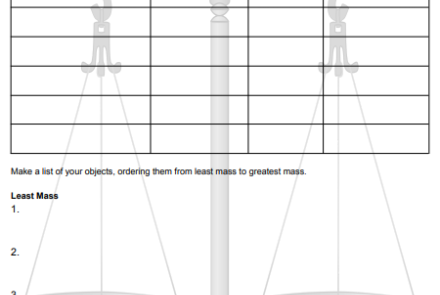
In this worksheet, students will take everyday objects from the classroom and use balance scales to find the mass. The students will first describe the object and then estimate the mass. They will then weigh the object and write down that actual mass. Finally, they will find the difference between the actual mass and the estimated mass. Once students are finished they will sort the mass from lightest to heaviest. The main purpose of this assignment is to have students make estimates and then use actual scales to find the mass.