Mineral Identification Lab
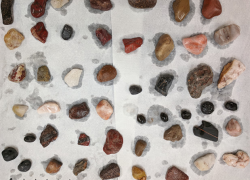
In this 4 day lab, students will become very familiar with the procedures involved in identifying minerals.
Day 1: Students will learn what streak, cleavage, and luster are.
In this 4 day lab, students will become very familiar with the procedures involved in identifying minerals.
Day 1: Students will learn what streak, cleavage, and luster are.
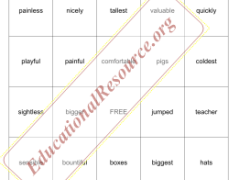
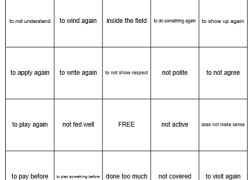
I use this Bingo activity as a review of multiplication strategies in my 3rd-grade classroom. There are 30 student cards and a teacher call sheet. This activity reviews groups of, repeated addition, using number lines to multiply and arrays. There are 16 squares per card and 25 different squares in the game. This way each card is unique and not all kids have all possible answers. When a student gets "Bingo" I actually have them go "Mmmmm, Multiplication" as if multiplication tasted good. It is fun.
In this lab I have students observe what happens to water, which represents air, warms up and what happens to water as it cools down. Using a hot plate, a large glass cake pan, a bag of ice and food coloring can easily demonstrate how wind is formed. The demonstration can also be used in topics of high/low pressure, warm and cold fronts, mantle convection if you would like. The assignment, however, is for high and low pressure systems and wind.
In this 3rd grade math activity students partner up. Each has their own paper. They each roll a dice and put the number in the first cell under roll 1. Next they roll again and put the second number under roll 2. They now create a multiplication equation using the 2 dice. They then create a division equation using the two dice. Finally they fill out the fact family triangle. At the end they add up all of their dice and whichever student has the highest sum takes the win.
3rd Grade Figurative Language Game. Students will identify sentences and figurative language as using similes, metaphors, personification, and hyperbole by shooting a cat through burning hoops.
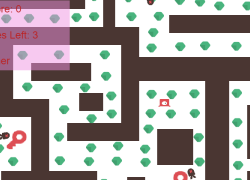
In this reading game, students will jump a character as it runs through an obstacle course. If the student misses a jump, a text structure reading question will appear. If the student answers the question correctly he/she will be able to continue. The question is missed, the character loses a try. Three tries lost, ends the game. After every mile the speed increases. The goal is to run 10 miles without missing three questions. Structures asked about are: Sequence, Compare and Contrast, Problem/Solution, Cause/Effect, Description, Chronology/Timeline
In this addition and comparing numbers math game, students will have an opportunity to reinforce their greater than, less than, and equal to fluency. This is a game where students will roll dice, write those numbers down, add them up, and then compare them to see who has the better shot to score a goal. Once they play 8 rounds they will add up their total wins and those of their partner and then compare the two numbers to see who won the game.
In this EdTech Earth Science activity, students will use Google Drawing to create an image that demonstrates the three main types of earthquake faults, Transverse, Normal, and Reverse. They will find 2 real images of each type of fault. They will draw arrows pointing in the direction that the forces, shear, compression, and tension are moving on each image. They will also find and add an actual diagram of each type of fault. Finally, students will label the hanging wall and footwall on each image except for the transverse/strike-slip.
In this Halloween version of bingo, teachers can call either the quotient or the equation. There are 30 cards where the teacher calls the quotient and students find a valid equation and 30 cards where the teacher calls the equation and students find an equal quotient.
The cards come with Halloween clip art that allows students to doodle or color in as well.
This activity is great for the days leading up to and on Halloween when students become very spooky themselves.
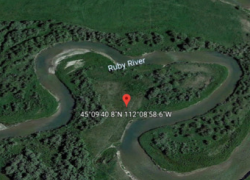
In this assignment, students will explore 25 features found in North and South America. They will circle, outline, and label specific locations on maps of North and South America. In the teacher instructions, you can also find a link to a Presentation that shows and discusses the geology and uniqueness of many of these locations.
For more Earth Science labs and resources visit EarthScience.xyz