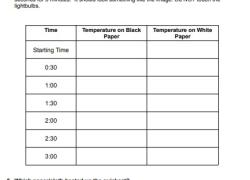
Students learn about the sun's heat energy transfer through radiation. They will investigate how colors affect heat absorption with a reading passage and an interactive lab experiment.
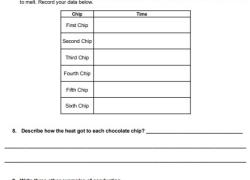
Students will learn about heat transfer through conduction. They will conduct an experiment, observe heat traveling, and identify real-life examples, deepening their understanding of scientific principles.
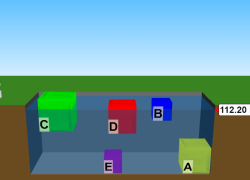
Students will understand mass, volume, and density concepts. They will digitally manipulate object volumes, measure masses, and calculate densities using an interactive simulation.
Engage students in observing four rocks to develop key observation and inference skills. They will infer rock environments and guess types before formal rock classification.
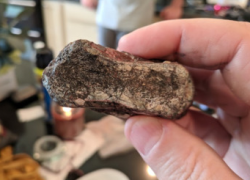
Equip students to master the scientific method through a hands-on experiment. They will practice data collection, identify variables, and formulate clear conclusions.
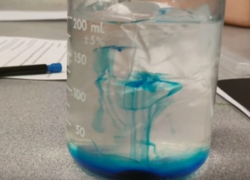
Students will estimate and then accurately measure the mass of everyday objects using balance scales. They will describe, weigh, calculate differences, and sort from lightest to heaviest.
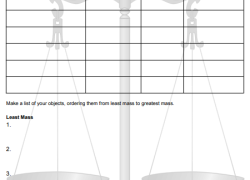
Engage students in understanding how bodies use energy to move. They'll learn about nutrients and muscle function through a reading and a hands-on sprinting experiment.
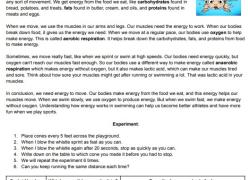
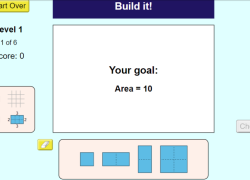
Students actively explore area and perimeter with a Phet simulation, building shapes to meet criteria. They advance through math challenges and a game, including fractions.
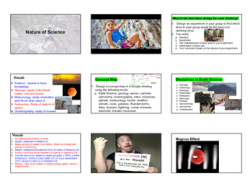
Empower students to investigate the nature of science through dynamic hands-on and digital labs. They will master the scientific method within Earth Science contexts.