x

Jobs in Earth Science Investigation

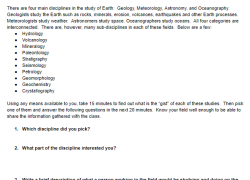
In this activity, students will briefly examine 10 fields/disciplines of Geology: hydrology, volcanology, mineralogy, paleontology, stratigraphy, seismology, petrology, geomorphology, geochemistry, and crystallography. They will pick one of those disciplines that they find interesting and find a job description in that field. Students will also find a salary range and what type of education they would need in order to obtain that salary. When students are finished, they should have an idea that there are money and great careers as a scientist in the field of Geology.

Exploring River Formation Earth Science Lab

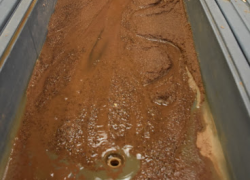
In this observation lab, students will use stream tables to observe how rivers form. When students are done they will understand how natural landslides can cause river course changes, how meanders are formed, how heavier sediment gets deposited quicker than lighter sediment like silt and clay, why rivers take the path they do, and how deltas are formed. Teacher notes, observations, suggestions, an answer key, and reflections are included.

For more Earth Science activities and resources visit, EarthScience.xyz

Bio-diesel Video

Have you ever wondered what happens to all that grease and oil after cooking your meals?  This video demonstrates how grease, cooking oil, and fats are being turned into biodiesel that can power diesel engines.

Rock Observation Lab

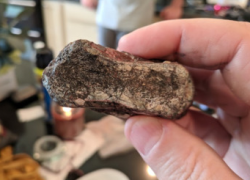
In this 7-12 Earth  Science lab, students will get a chance to hone in on their observation and inference skills. Students will work in groups to observe 4 different rocks. They will make inferences about the environment that the rocks came from as well as take an educated guess as to which rock type the rock belongs, igneous, metamorphic, or sedimentary. Students will write those observations down and then share one of their rocks with the class.

Science Experiment Demonstrating the Scientific Method

At the beginning of science courses, usually, the scientific method is taught. My high school students have to demonstrate their knowledge of the scientific processes and especially show an understanding of data collection, variables, and conclusions. This document contains the rubric I use to grade their assignment as well as the student instructions that I give. This is in a Google doc so that you can edit the instructions or manipulate the rubric.

Sediment Permeability and Porosity Lab

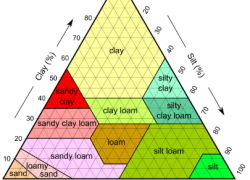
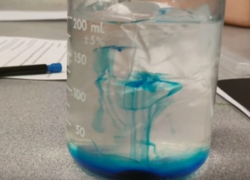
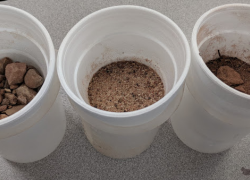
In this lab, students will design and experiment to determine which sediment type is the most permeable and porous. This is very open to a student's design. The teacher should give little to no help with this experiment. I use this lab to assess a group's ability to design and experiment and come up with a statement of conclusion. I am looking for their ability to use time wisely, set up an experiment, gather data, practice safe lab techniques, and use variables correctly. Teacher reflection and procedures are included.

Subscribe to Environmental Science