
Find the Total Area Game
Students determine the total area of composite figures by splitting them into rectangles. They apply the distributive property and solve for missing side lengths.
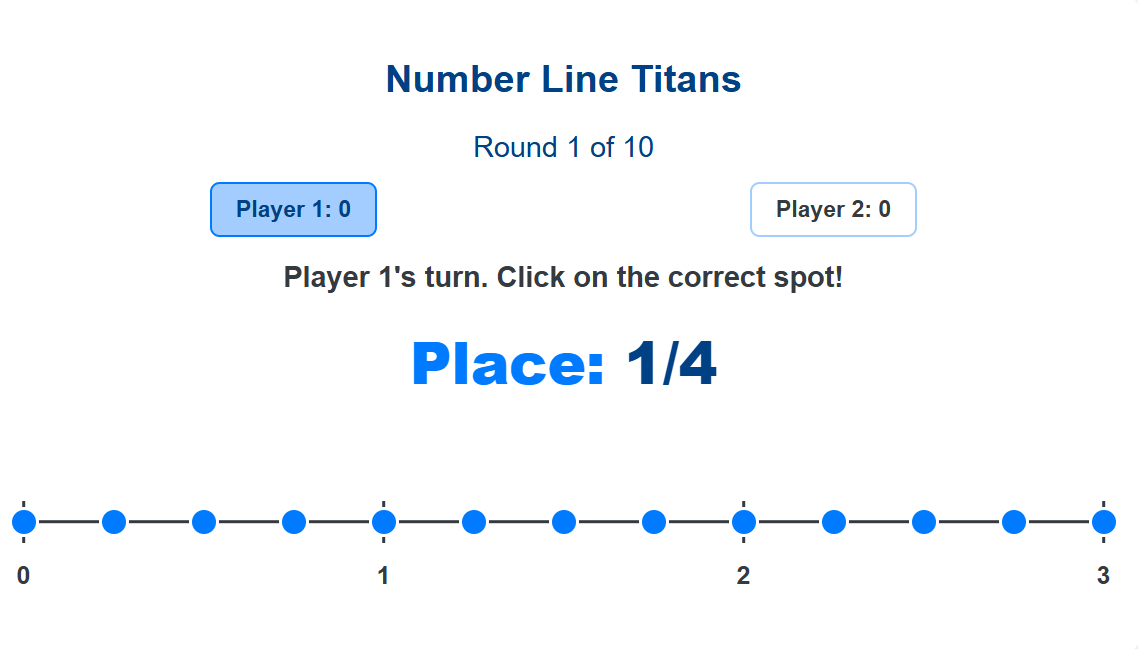
Number Line Titans Greater than 1 Whole -- Two Player Game
Students will interactively master fractions and mixed numbers greater than one by accurately placing and naming them on dynamic number lines. Builds crucial conceptual understanding and number sense.
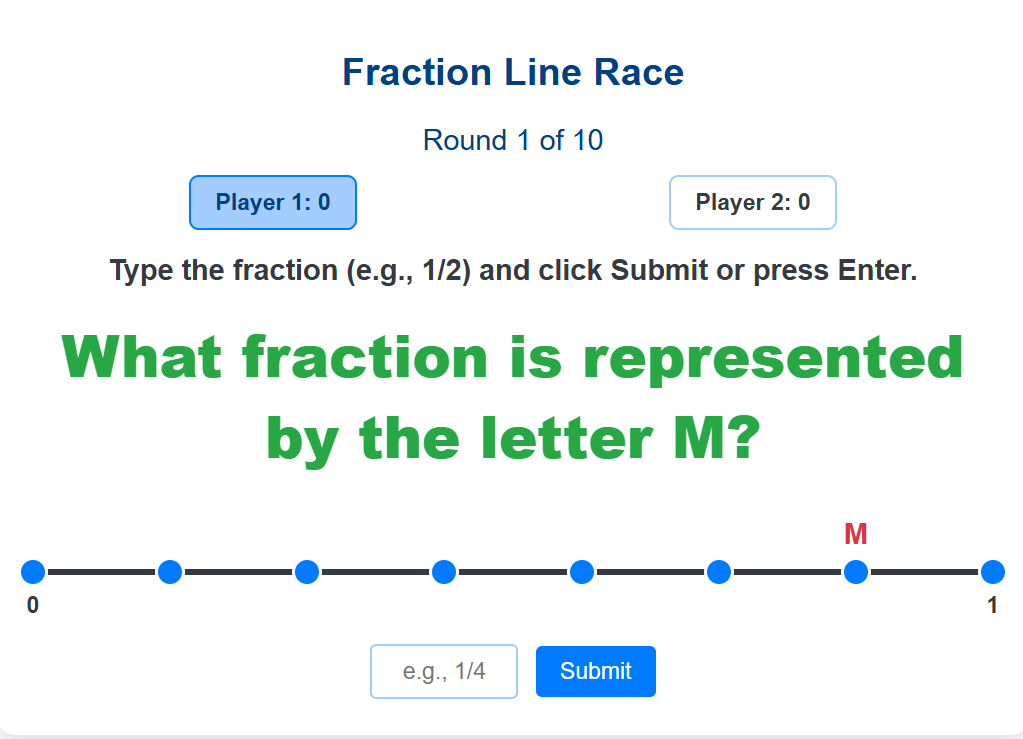
Fraction on Number Line Race 2 Player
Engage students in a competitive two-player game to place and identify fractions visually. They will build confidence mastering fraction representation and common denominators on a number line.
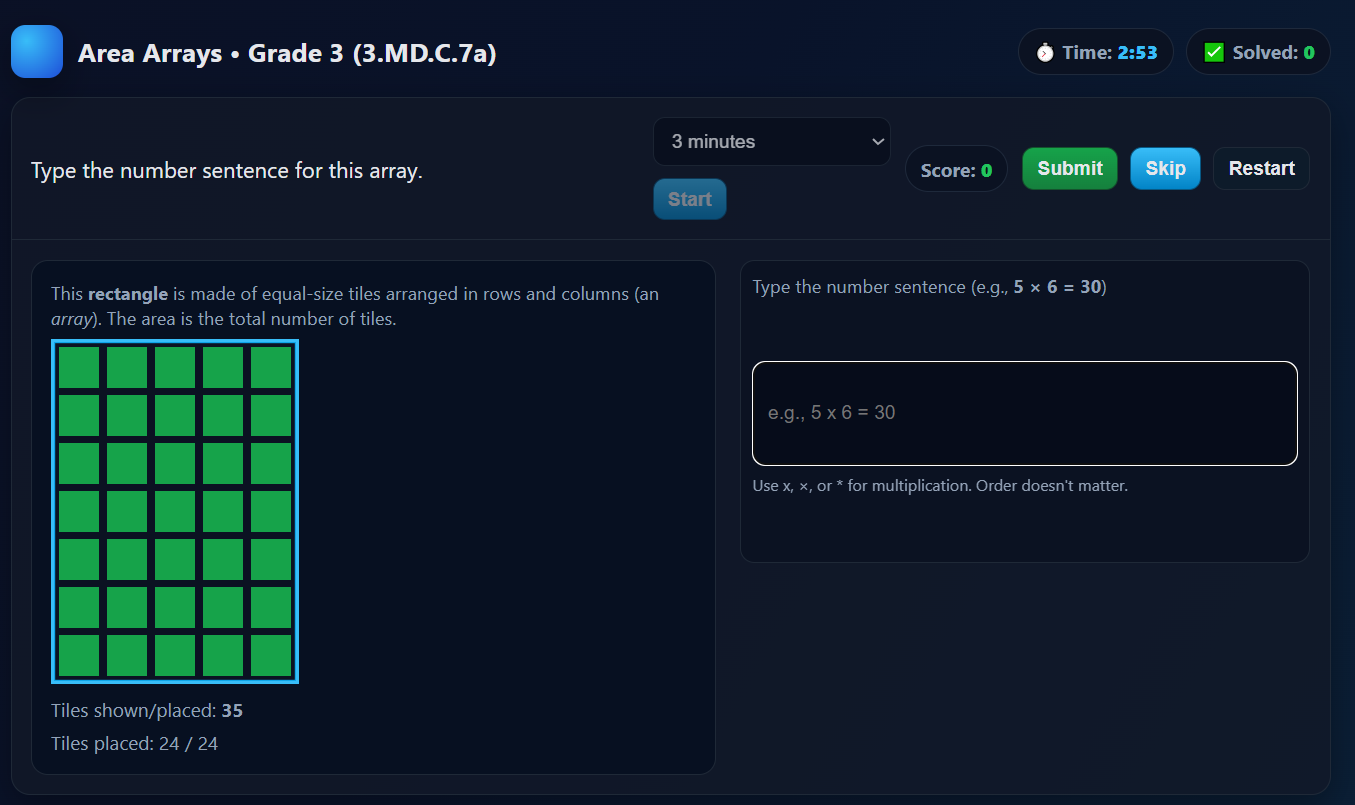
Area by Tiling Game
Students explore area by tiling rectangles with unit squares. They build arrays, write multiplication sentences, and discover how different dimensions create the same total area.
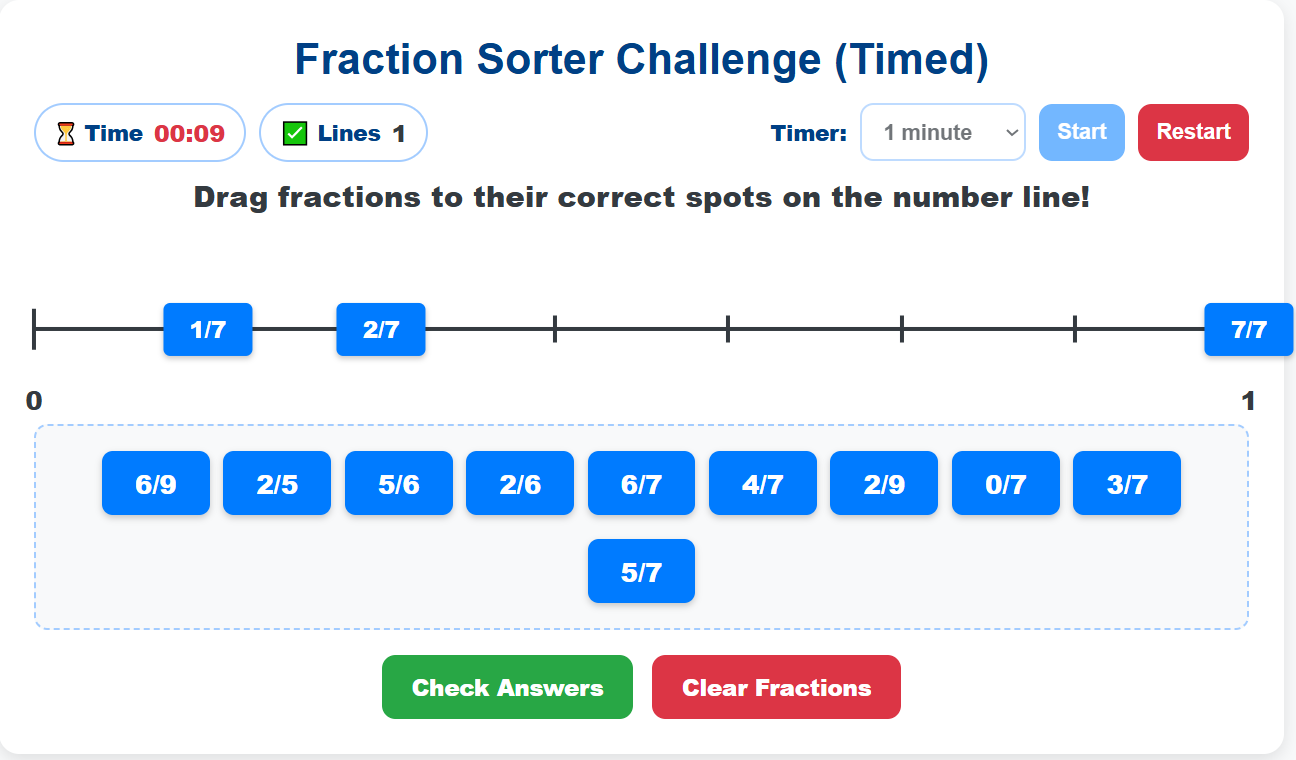
Fraction on a Number Line Sorter Challenge
Help students master number line skills by dragging and dropping fractions from 0 to 1. They practice equivalence, avoid misconceptions, and receive instant feedback in this challenge.
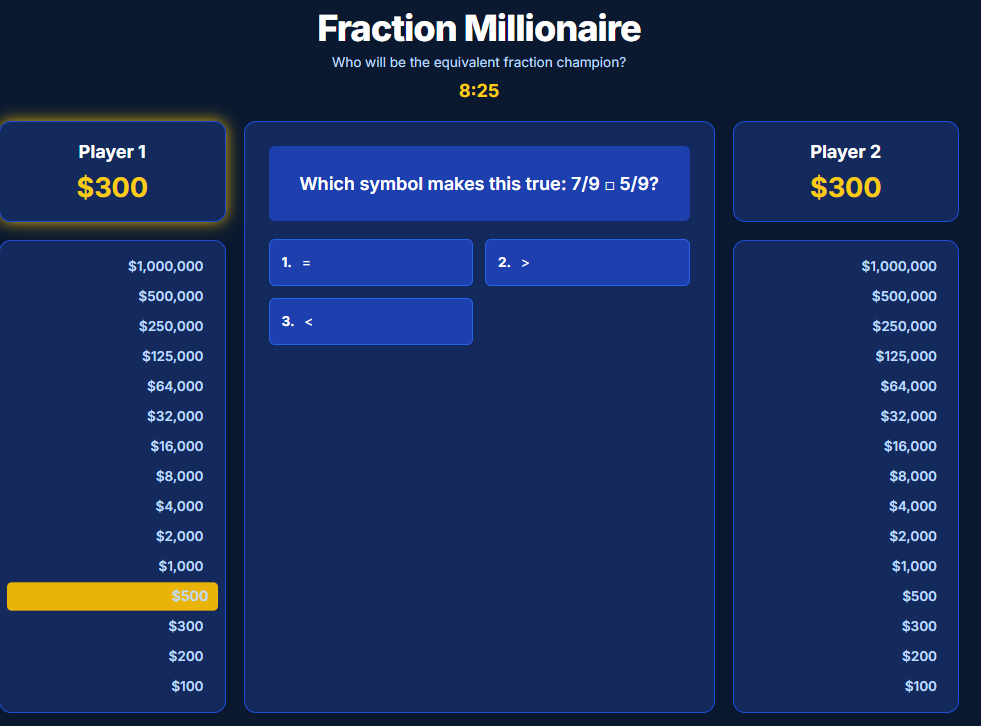
Fraction Millionaire Comparing and Finding Equivalent Fractions Game
Challenge students to master equivalent fractions through a competitive game show. They will compare and find fractions, tackle engaging questions, climb a money ladder, and strengthen their fraction reasoning.
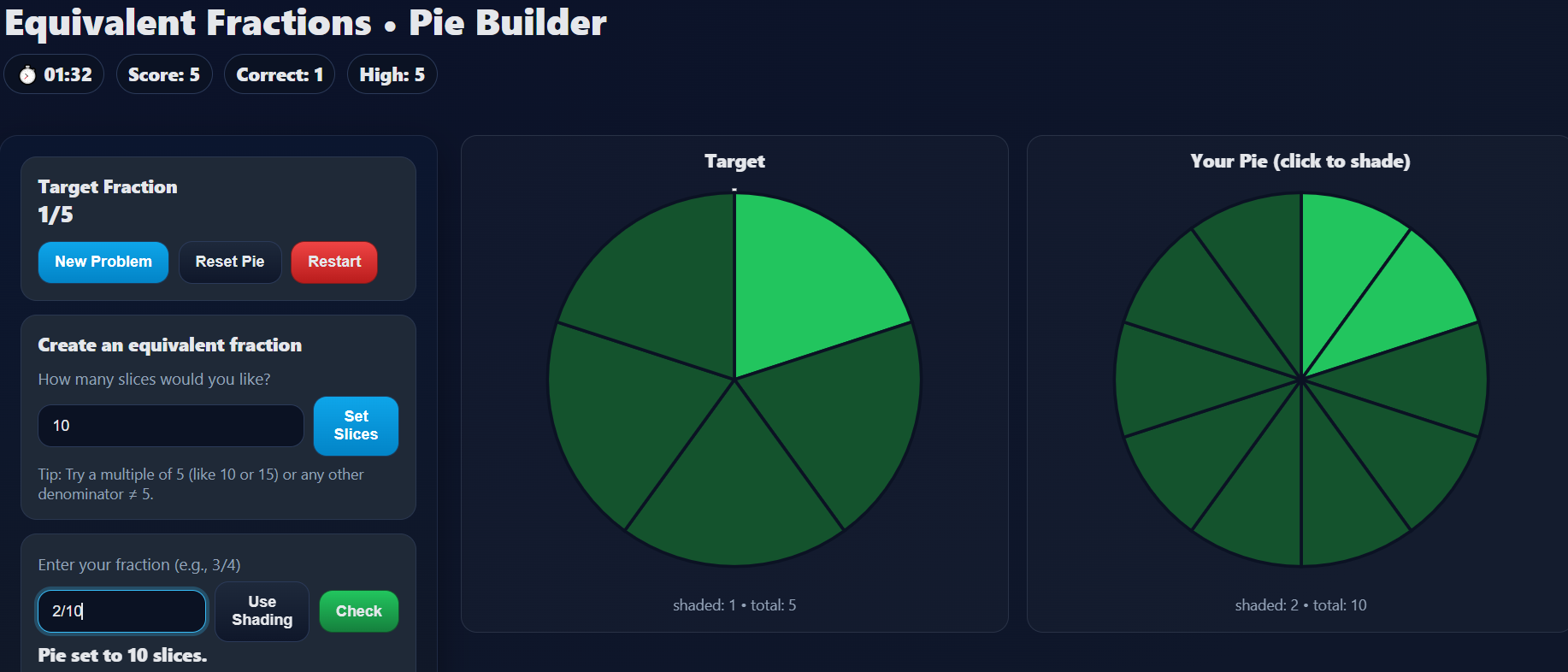
Equivalent Fractions • Pie Builder Game
Students interactively explore equivalent fractions, visually building and shading pies to match a target. They receive instant feedback, reinforcing understanding and engaging them in meaningful fraction practice.
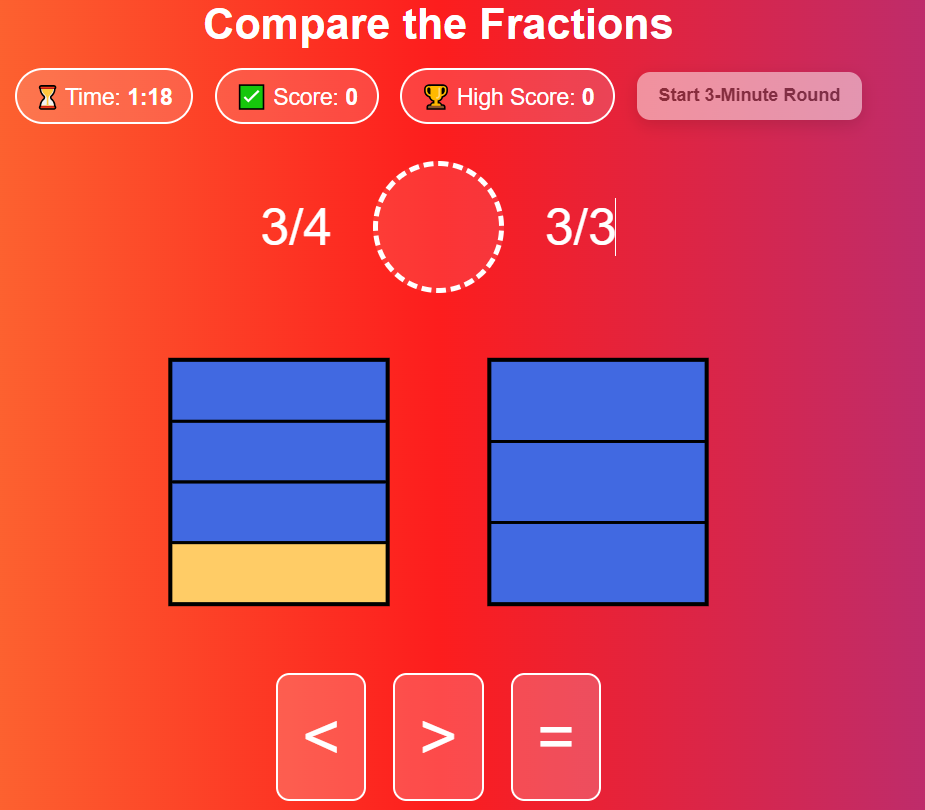
Compare the Fractions
Students build visual understanding of fraction size by comparing them using interactive models. They decide less than, greater than, or equal in a timed, engaging challenge.

Fraction Comparison on Number Lines Speed Game
Students will plot proper, improper, and mixed fractions on number lines. They then compare magnitude using , or = to build strong fraction sense and understand benchmarks.
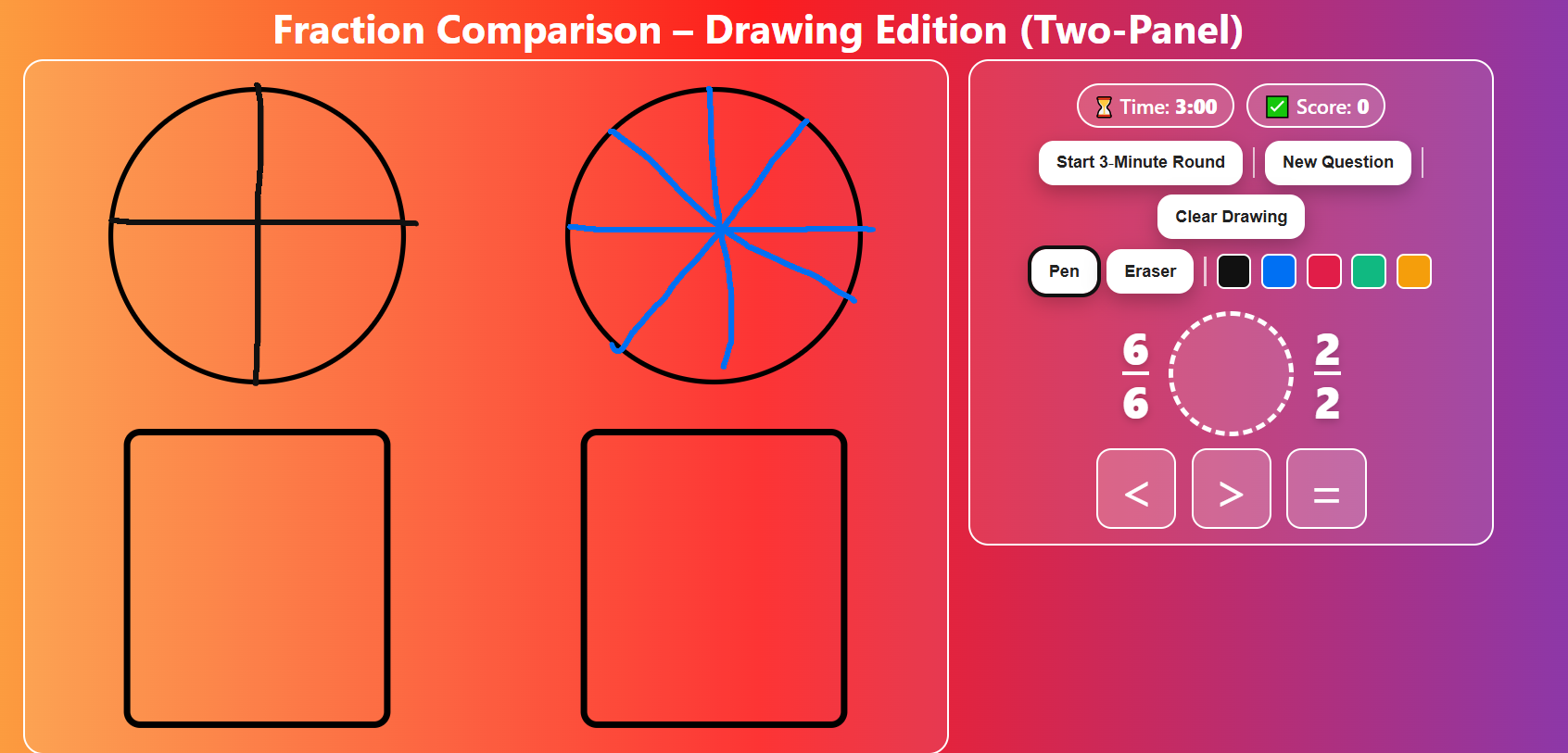
Fraction Comparison Game
Students actively compare fractions using drawing and visual models. They decide if fractions are less than, greater than, or equal, building strong fraction sense.
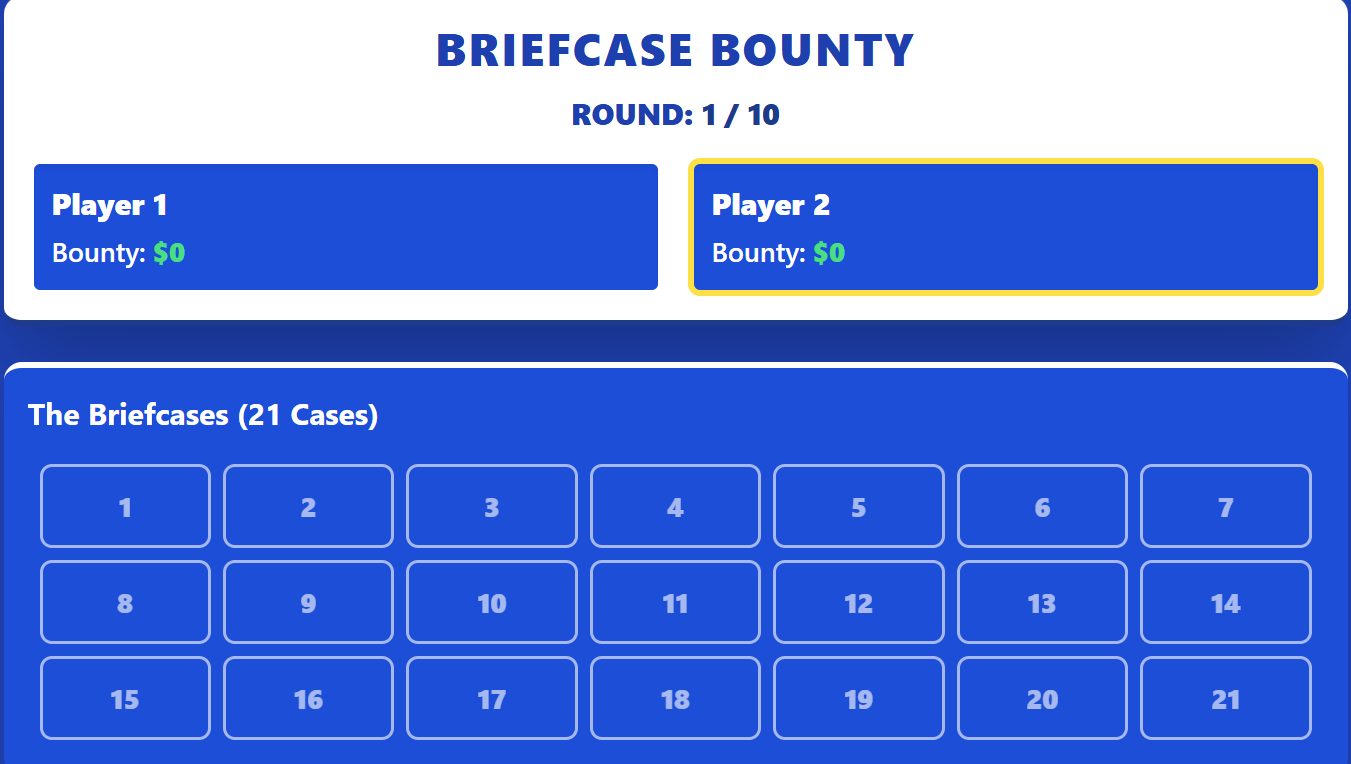
Briefcase Bounty Number Patterns Game
Engage students with a fast-paced game to master number patterns, sequences, and tables. They will develop fluency, speed, and strategic thinking under pressure.
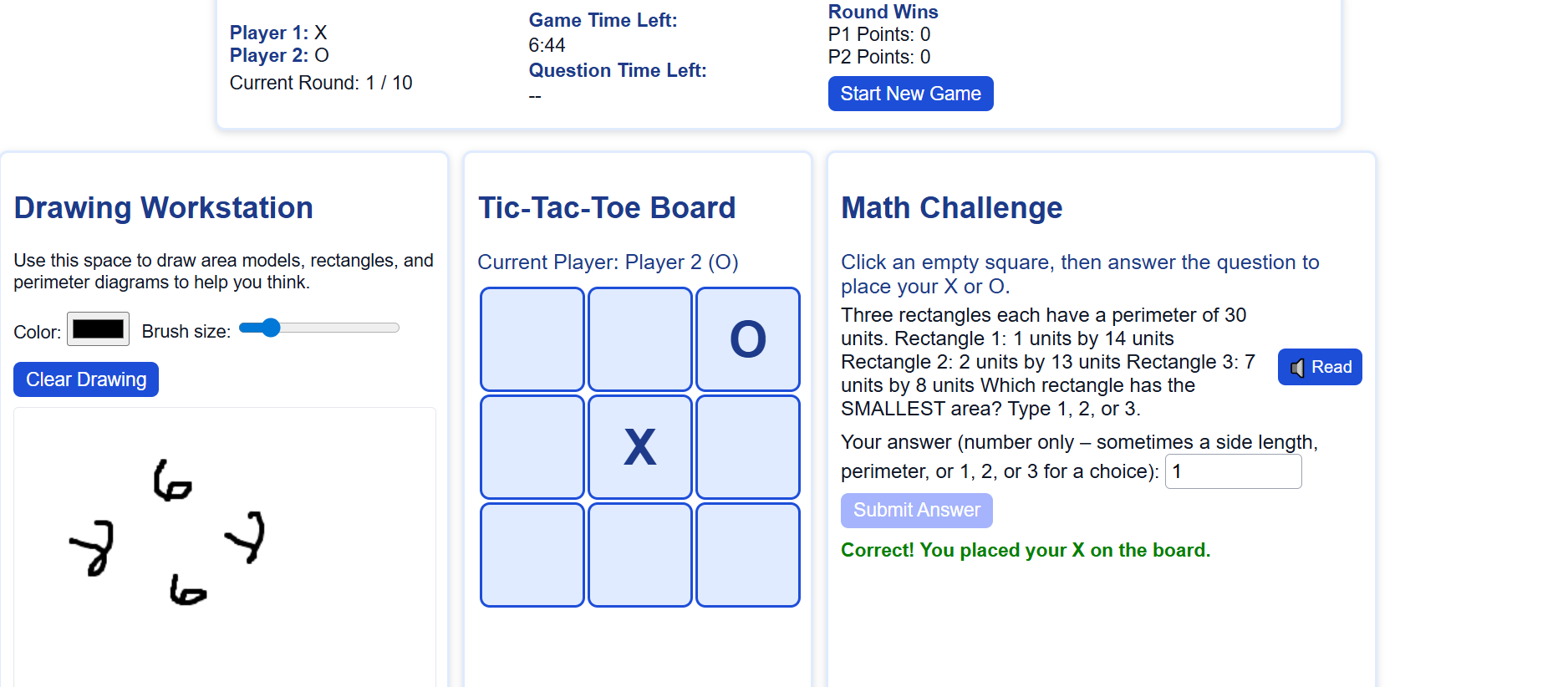
Area and Perimeter Tic-Tac-Toe
Your students will strengthen their understanding of area and perimeter by solving varied problems in an interactive tic-tac-toe game. They'll practice finding missing dimensions and comparing rectangles.