x

3rd Grade Line Plots and Measuring Quarter Inch Reteach Worksheet

Line Plots and Measuring to the Quarter Inch – 3rd Grade Math Worksheet (Reteach & Practice)

Strengthen your students’ measurement and data skills with this engaging 3rd grade line plots and measurement worksheet! This printable math resource gives students hands-on practice measuring to the nearest ½ inch and ¼ inch, organizing data, and creating accurate line plots.

In this two-page worksheet, students will:
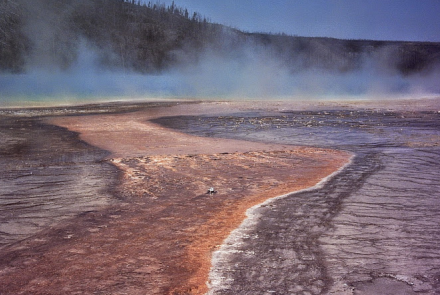
Water Features Found In Yellowstone National Park Presentation

In this assignment, students will research 6 water features that are found in Yellowstone National Park. They will find three images and three facts about each feature. They will create a 7 slide presentation. Attached is a paper that contains a grading rubric and the student instructions for this assignment. Water features researched are Hot springs, travertine terraces, mud pots, geysers, fumaroles, and thermophiles.


Interactive and Review Reading Log: Friday to Thursday

This is an activity-based reading log.

My idea behind this type of reading log is threefold.

1. Keep track of the books that students are reading and the time they are reading each day.

2. Practice a skill-based on reading, writing, and science standards as well as a review of previously taught standards to add more practice.

3. To give students an opportunity to interact more with their parents and siblings, through instilling a little more patriotism, awareness of national events and ideas, and learn a little bit of charity and acts of kindness to others.

Interactive Review Reading Log--Monday to Friday

This is an activity-based reading log.

My idea behind this type of reading log is threefold.

1. Keep track of the books that students are reading and the time they are reading each day.

2. Practice a skill, based on reading, writing, and science standards as well as a review of previously taught standards to add more practice.

3. To give students an opportunity to interact more with their parents and siblings, through instilling a little more patriotism, awareness of national events and ideas, and learn a little bit of charity and acts of kindness to others.

Jobs in Earth Science Investigation

In this activity, students will briefly examine 10 fields/disciplines of Geology: hydrology, volcanology, mineralogy, paleontology, stratigraphy, seismology, petrology, geomorphology, geochemistry, and crystallography. They will pick one of those disciplines that they find interesting and find a job description in that field. Students will also find a salary range and what type of education they would need in order to obtain that salary. When students are finished, they should have an idea that there are money and great careers as a scientist in the field of Geology.

Measure Distance using the Metric System while flying pens across the classroom

This science lab can be used in any of the science disciplines because it is going to help students learn how to read a meter tape. Students will learn what the Magnus Effect is and how to demonstrate the Magnus Effect by "flying" a hollowed-out "Bic" pen across the classroom. Students will also learn how to create a spreadsheet and then add a formula that will automatically calculate the average of their pen flight distances. I use this lab at the beginning of the year to get students excited about science as well.

Mechanisms and Agents of Weathering Presentation

In this assignment, students will find images of rocks and rock formations that demonstrate that weathering has occurred. They will create a Google presentation that demonstrates the mechanisms and agents of weathering involved. They will also describe the type of climate that would have helped form this rock. Students will then present their findings to the class. Hopefully, you will get many different images of awesome rock formations.

For more Earth Science labs and lessons visit, EarthScience.xyz.

Expository Text Features Scavenger Hunt

This worksheet is a scavenger hunt that students can use to learn and relearn the knowledge of expository text features.  In the worksheet, students will find titles of diagrams, titles of charts, captions, keywords, bullet points, illustrations, table of contents, glossary, sidebars, titles, subtitles, and maps.

I use the Scholastic News with this worksheet, but it could work with any magazine type.

Subscribe to Google Doc