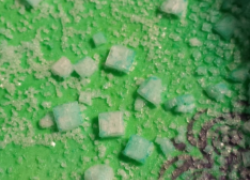
Students observe crystal formation and explore how impurities change mineral color in this Earth Science lab. Perfect for grades 3-10, it includes student work and sample results.
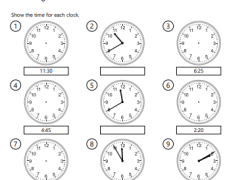
Students will master reading time by analyzing clock faces and drawing hands for digital displays. Includes a bonus multiplication review word problem.
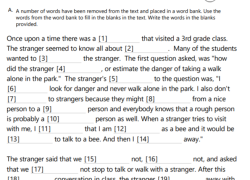
Engage 3rd graders with a cloze activity on stranger awareness. Students will fill 19 missing words from a list, enhancing reading comprehension, vocabulary, and safety knowledge.
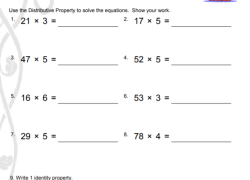
Engage elementary students with distributive property practice, finding products. They will also review identity, zero, commutative, and associative properties, solidifying foundational math understanding.
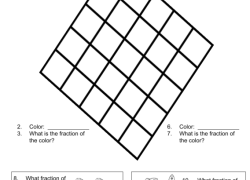
Students design colorful 5x5 grid patterns, then determine fractions for each color. They also practice finding fractions from animal and flying machine groups, building fraction mastery.
Guide students to observe and explain how geysers work. They will understand the roles of heat, pressure, and water in creating an eruption, connecting models to real phenomena.
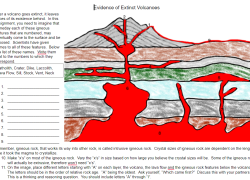
Students label volcanic features, learning igneous rock formation, superposition, and cross-cutting relationships. They will identify evidence of past volcanism and present real-world examples.