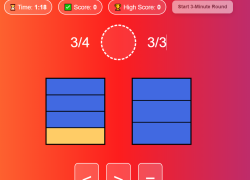
Students build visual understanding of fraction size by comparing them using interactive models. They decide less than, greater than, or equal in a timed, engaging challenge.
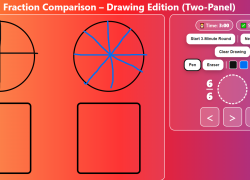
Students actively compare fractions using drawing and visual models. They decide if fractions are less than, greater than, or equal, building strong fraction sense.
Engage students with a fast-paced game to master number patterns, sequences, and tables. They will develop fluency, speed, and strategic thinking under pressure.
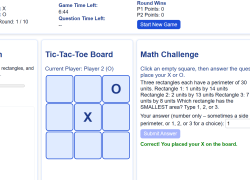
Your students will strengthen their understanding of area and perimeter by solving varied problems in an interactive tic-tac-toe game. They'll practice finding missing dimensions and comparing rectangles.
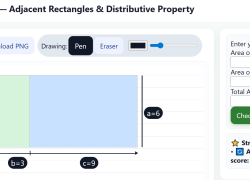
Students explore area concepts with an interactive tool. They calculate and combine adjacent rectangle areas to find total shapes, reinforcing multiplication and the distributive property.
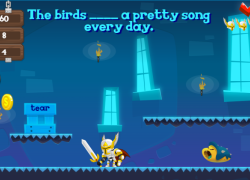
Engage students in a vocabulary-building activity. They will fill in missing words, practice fact/opinion, context clues, and drawing conclusions to boost comprehension.
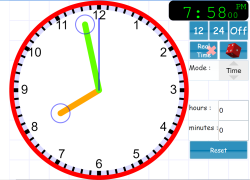
Students actively learn analog and digital time, angles, and fractions with an interactive clock. Teachers will find smartboard control effortless for engaging demonstrations.
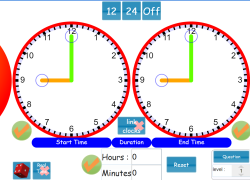
Engage students with interactive, Smartboard-friendly clocks to practice elapsed time. They will calculate, verify, and solve word problems, mastering time concepts digitally.
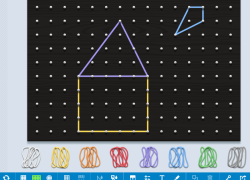
Guide students to create various 2D shapes and original images using a digital geoboard. Students explore properties, area, and perimeter through interactive design.
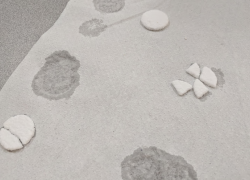
Engage students to design an experiment investigating how surface area impacts physical weathering. They use Alka-Seltzer to model rocks, developing hypotheses and drawing conclusions on weathering rates.
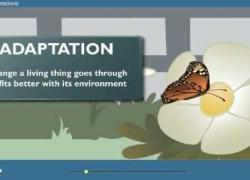
Students will explore animal adaptations and how they protect species. They will learn about natural selection, inherited behaviors, and fascinating examples like migration and hibernation.
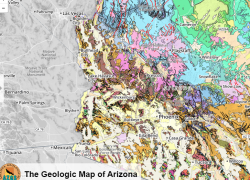
Students will analyze geologic maps to determine rock types, faults, and ages. They learn about Arizona's ancient environments and review essential Earth Science terms.