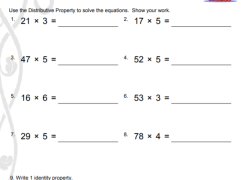
Engage elementary students with distributive property practice, finding products. They will also review identity, zero, commutative, and associative properties, solidifying foundational math understanding.
Guide students to observe and explain how geysers work. They will understand the roles of heat, pressure, and water in creating an eruption, connecting models to real phenomena.
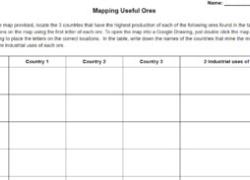
Students research valuable industrial ores, identify top global producers, and map their locations. They will also learn diverse industrial uses, reinforcing geography skills.
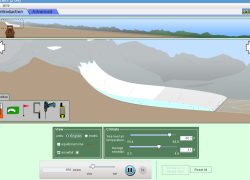
Students explore glacial formation, growth, and shrinkage. They act as scientists in an interactive lab, discovering how glaciers move and impact Earth's landscapes over time.
Help students understand how melting glaciers impact ocean levels. This video clarifies the role of thermal expansion in rising waters, connecting it to climate change.
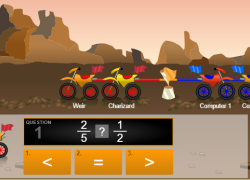
Students learn to assess fractional values in an engaging multiplayer tug-of-war game. They compete globally, building strong fraction skills and strategic thinking.
Students will explore an animated comparison illustrating the vast scale differences between cells, bacteria, viruses, and cellular parts. Enhance their understanding of microscopic dimensions.
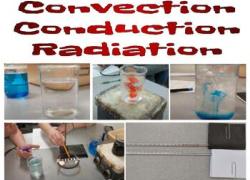
Students actively explore convection, conduction, and radiation through hands-on labs. They'll demonstrate principles using water, melting chocolate, heat lamps, and different colored papers.
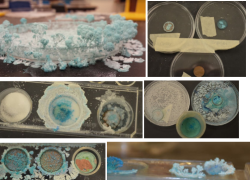
Challenge students to design and conduct their own penny oxidation experiment. They apply the scientific method, observe chemical weathering, and deepen content understanding through daily observations.
Empower students to master time-telling! Generate custom clock images with various hands, numbers, and features. Perfect for lessons exploring elapsed time, analog clocks, and time concepts.

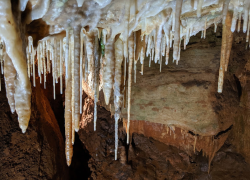
Students learn about common cave formations by identifying images, then research an assigned cave to answer specific questions. This activity builds curiosity for Earth's amazing underground environments.
Students investigate how melting glaciers contribute to rising ocean levels. This video also clearly explains thermal expansion, linking it to the impacts of climate change.