Engage students in the meticulous process of fossil excavation and preparation. They will learn how ancient relics journey from discovery in rock to museum exhibition.
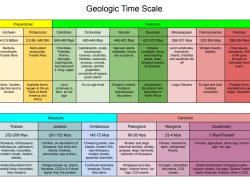
Guide students to explore Earth's geologic history from Precambrian to Cenozoic. They will learn about ancient creatures and landforms through a captivating, color-coded visual timeline.
Engage students with a side-splitting video parody showing a calamitous weather forecast. Students will explore humor and unexpected outcomes, sparking discussion and observation skills.
Your students will explore how silica, oxygen, and light create transparent glass. Engaging animations reveal the science behind this common, clear material.
Students will learn the theory of plate tectonics through an engaging video. They will understand key scientific terms and Earth's dynamic plate movements with clear visuals.
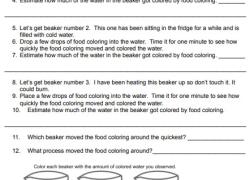
Students will explore convection, discovering how the sun's energy warms air and land, causing heat to transfer through rising warm air and sinking cool air.
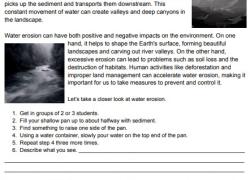
Students will read about and then explore water erosion through hands-on simulations. They'll observe how water shapes landscapes and analyze its diverse environmental impact.
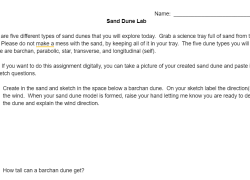
Students will explore five sand dune types by creating models and identifying characteristics. They will learn how wind patterns shape these geological formations, deepening their knowledge of earth science.
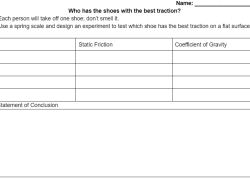
Your students will investigate and compare shoe traction by measuring static friction in this physics experiment. They conduct the lab, analyze data, and draw conclusions on optimal grip.
Students will solve engaging problems applying momentum, impulse, force, velocity, and kinetic energy to strengthen physics understanding. An answer key is provided.
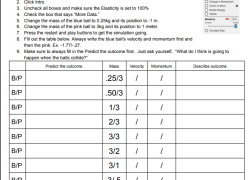
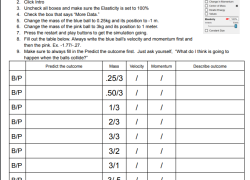
Students investigate collision and momentum through a digital simulation. They make predictions, analyze results, and deepen understanding of elastic/inelastic collisions, velocities, and data analysis.
Students will conduct hands-on experiments, exploring motion and collision principles. They'll investigate how size and mass impact interactions, connecting lab discoveries to practical, real-life physics.