x

Momentum and Impulse Problems to be Solved With Answer Key

This worksheet is designed to help students strengthen their understanding of momentum and impulse in physics. Through a series of engaging problems and calculations, students will explore concepts such as momentum, force, velocity, and kinetic energy.

Engaging with these problems will enhance your comprehension of momentum and impulse concepts while honing your problem-solving skills. Have fun tackling the challenges and mastering the principles of physics!

The answer key is provided as well.

Why do some objects feel colder when in reality they are the same temperature?

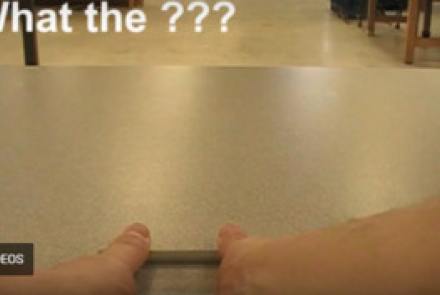
In this video pedestrians in a park are asked why a hard drive and a book sitting at the same temperature have a different temperature feel to them.  The hard drive feels colder than the book.  He then takes an aluminum plate and a plastic plate to see which plate melts ice quickly.  Even though the aluminum plate feels colder, it melts the ice quickly.  This is a good experiment to try with your students.

Measure Distance using the Metric System while flying pens across the classroom

This science lab can be used in any of the science disciplines because it is going to help students learn how to read a meter tape. Students will learn what the Magnus Effect is and how to demonstrate the Magnus Effect by "flying" a hollowed-out "Bic" pen across the classroom. Students will also learn how to create a spreadsheet and then add a formula that will automatically calculate the average of their pen flight distances. I use this lab at the beginning of the year to get students excited about science as well.

Science Experiment Demonstrating the Scientific Method

At the beginning of science courses, usually, the scientific method is taught. My high school students have to demonstrate their knowledge of the scientific processes and especially show an understanding of data collection, variables, and conclusions. This document contains the rubric I use to grade their assignment as well as the student instructions that I give. This is in a Google doc so that you can edit the instructions or manipulate the rubric.

Subscribe to Physical Science